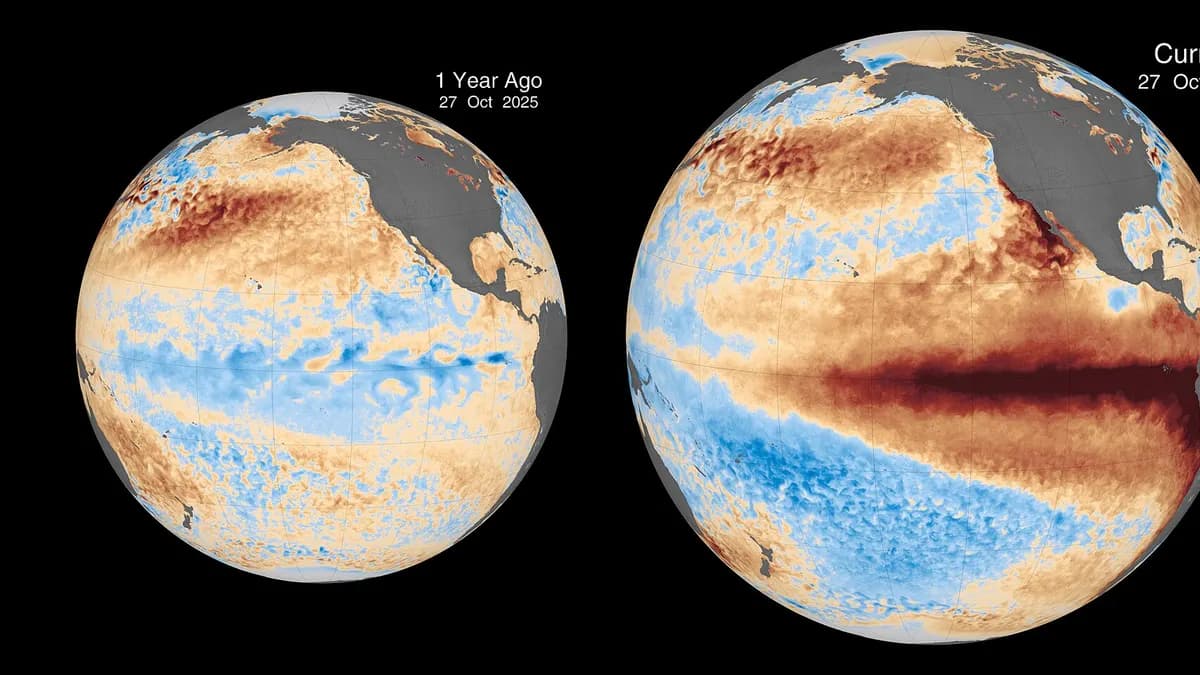
The El Niño developing in the Pacific reached a record anomaly of +3.4 °C in the Niño 3.4 region on October 20, 2026, and is expected to peak between November and December. That is the explanation of climate scientist René Garreaud in an analysis by the Center for Climate and Resilience Research (CR2) published on November 3. The US agency NOAA, in its October 8 bulletin, considers a "strong to very strong" El Niño likely through January-March 2027.
For anyone traveling around Chile this summer, that means hotter-than-normal weather in the north, less rain in the Altiplano and northern Patagonia, and the possibility of short but intense showers in central Chile. The issue has already reached politics: three members of Congress asked Sernatur, the national tourism service, to bring the tourist season forward in north-central Chile, according to G5noticias.
What the 2026 El Niño is and why it is called historic
El Niño is the abnormal warming of the surface of the equatorial Pacific Ocean, which alters atmospheric circulation across much of the planet. It is measured by sea temperature in the Niño 3.4 region, in the east-central equatorial Pacific. According to CR2, October's +3.4 °C is the highest value on record; the major events of 1982-1983, 1997-1998 and 2015-2016 serve as references, although each had different effects in Chile.
- October 8, 2026NOAA sees a strong to very strong El Niño as likely through January-March 2027
- October 20, 2026The Niño 3.4 region reaches +3.4 °C, a record
- November 3, 2026CR2 publishes its analysis: warmer summer in the north, drier in the south
- November 4, 2026Lawmakers ask Sernatur to bring the season forward in north-central Chile
- November-December 2026Expected peak of the event
- Autumn (southern) 2027El Niño would remain moderate, according to the model average
One point CR2 stresses: a strong El Niño does not guarantee rain in central Chile. The 1997 event brought major storms, but the 2015 one "failed" to deliver rainfall in the central zone. The effect depends on how winds and frontal systems line up each season.
Summer with El Niño in Chile: what to expect by zone
| Zone | What is expected between December 2026 and February 2027 | Source |
|---|---|---|
| North (Arica to Coquimbo) | Higher chance of above-normal highs and lows. Possible short, intense storms on the coast and in the pre-Altiplano | CR2, citing the DMC forecast |
| Altiplano (San Pedro de Atacama, Lauca) | Below-normal summer rainfall (the so-called Altiplanic winter) | CR2 |
| Valparaíso | Above-normal highs | CR2, citing the DMC |
| Santiago to Biobío | Lower highs than in the north; a mostly dry summer, with a risk of intense convective rain if a disturbance arrives | CR2 and Megatiempo |
| Los Lagos and Aysén | Lower chance of summer rain and a "not insignificant chance" of severe drought in summer and autumn 2027, as in 2016 | CR2 |
Source: CR2 analysis of November 3, 2026, summarizing the seasonal forecast of the Chilean Meteorological Directorate (DMC). These are probabilities, not certainties: CR2 itself warns that "reducing the probability does not eliminate the possibility" of rain, and that heat episodes in central Chile cannot be ruled out.
What El Niño means for travelers in Chile
| If you're traveling to… | What to keep in mind | More information |
|---|---|---|
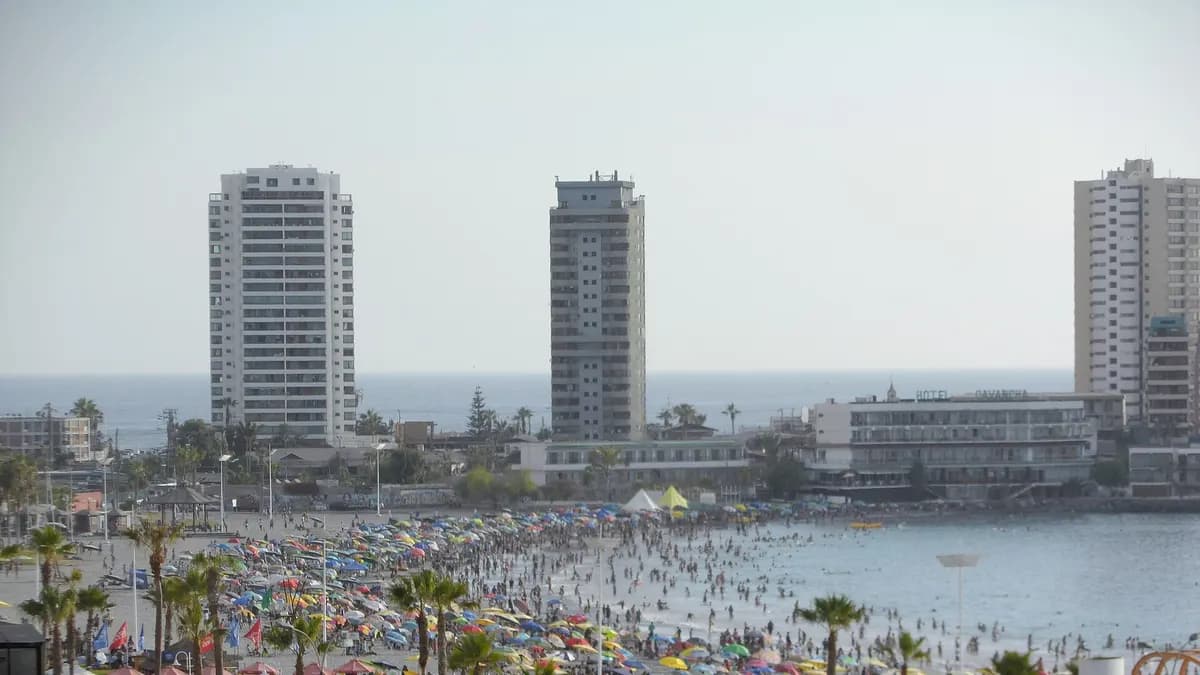
| Northern beaches (Arica, Iquique, La Serena) | More hot days and slightly warmer water; sun protection and early bookings | Things to do in Iquique and in Arica |
| San Pedro de Atacama and the Altiplano | Less summer rain: lower risk of road closures from the Altiplanic winter, but strong daytime heat | Valle de la Luna |
| Santiago and central Chile | Heat and wildfire risk; brief but heavy showers possible | Preventive heat alert |
| Parks and forests | More dry grass: fire restrictions and possible trail closures on alert days | Wildfire season |
| Chiloé, Carretera Austral and Aysén | A potentially drier-than-normal summer; watch for red tide if drought and warm seas combine | Red tide |
Viajando Chile recommendations based on the forecasts cited. CR2 links drought years in the south with harmful algal blooms, such as those of 2016, which hit aquaculture and the beaches of Chiloé.
El Niño and the tourist season: calls to start it early
Members of Congress Ximena Naranjo (Tarapacá), Marco Antonio Sulantay (Coquimbo) and Hotuiti Teao (Valparaíso), of the UDI party, asked Sernatur to consider starting the summer season earlier in north-central Chile: bringing forward the promotion campaigns planned for 2027 and launching programs already in the pipeline sooner. "There's no reason to wait until December or January to start the summer season," they said, according to G5noticias. According to the same report, Iquique's hotel association has already decided to start its season early.
As of November 5, Sernatur had not publicly responded to the request. The official high season is usually concentrated in January and February; our guide on when to visit Chile explains what suits each zone and month.
Frequently asked questions
What will summer 2027 be like in Chile with El Niño?
According to CR2 and the DMC, hotter than normal from Valparaíso northward, mostly dry in central Chile with a risk of isolated heavy rain, and with less rain than usual in the Altiplano, Los Lagos and Aysén.
Does El Niño bring summer rain to Santiago?
Not necessarily. CR2 expects a lower probability of summer rain, although a disturbance could produce intense convective showers.
Does El Niño affect trips to San Pedro de Atacama?
A summer rainfall deficit is expected in the Altiplano, which lowers the risk of closures due to the Altiplanic winter. Daytime temperatures may be high.
How long will the 2026 El Niño last?
NOAA considers it likely through January-March 2027, and the model average cited by CR2 keeps it as a moderate El Niño until the southern autumn of 2027.