In 2024 there were 33,203 foreign students enrolled in Chilean higher education, 19.2% more than in 2023 and almost twice as many as in 2020, according to the National Education Council (CNED) as reported by [La Tercera](https://www.latercera.com/nacional/noticia/matricula-de-estudiantes-extranjeros-en-educacion-superior-crecio-un-19-en-2024/KLUSTNUGPJFPXAJFD2V2ATRCKU/). They come from 101 countries, mostly Peru, Venezuela and Colombia. There are two ways into a university: sit the PAES exam like any Chilean applicant, or use the special admission route for people who finished secondary school abroad that several universities offer. Then comes the student visa, which you apply for from your home country.
*Updated on 9 November 2026.* This guide brings together the official requirements, the 2027 admission calendar, what it costs to study and live in each city and where the country's university students are.
Studying in Chile as an international student: the numbers
View the data as a table
| Foreign students enrolled in 2024 | 33,203 |
| Increase on 2023 | +19.2% |
| Different nationalities | 101 |
| Of all students | 2.6% |
Foreign enrolment grew from 1,832 students in 2005 to 33,203 in 2024 and now makes up 2.6% of all higher education students. 81.4% are undergraduates; the rest are in postgraduate or postgraduate certificate programmes. According to SIES data compiled by CIPER, 96.6% come from Latin America and the Caribbean and only 1.5% from Europe.
| Nationality | Share of foreign enrolment (2024) |
|---|---|
| Peru | 26.3% |
| Venezuela | 18.9% |
| Colombia | 15.3% |
| Bolivia | 10% |
| Haiti | 7.2% |
| Europe (all countries) | 1.5% |
Source: SIES, via CIPER and La Tercera. According to La Tercera, the fields most chosen by foreign students are Business (28.8%), Technology (27.7%) and Health (18.9%).
How to apply to a Chilean university: PAES or special admission
Route 1: the PAES. The Higher Education Access Test is run by DEMRE at the Universidad de Chile and gives access to the universities in the centralised Access System. According to ChileAtiende, it can also be taken by "foreigners who validated secondary education completed outside Chile" through the Ministry of Education's recognition of studies procedure. Registering for one test costs CLP 17,500; two, CLP 32,000; and three or more, CLP 46,500. With your score you can apply to up to 20 programmes.
Route 2: special admission for foreigners. Many universities have separate places for people who finished secondary school in another country. The most detailed is the Universidad de Chile route (SIEXT): you must have completed at least the last two years of secondary school abroad; it does not use the PAES but its own Mathematics and Reading tests (plus a subject test depending on the programme), taken in Santiago; and it offers at least 3 places per programme. Applying costs CLP 40,000, or US$50 from abroad, you can apply to up to 4 programmes and teaching is in Spanish only.
| PAES (Access System) | Special admission (e.g. SIEXT, U. de Chile) | |
|---|---|---|
| Who | Foreigners whose secondary education is recognised in Chile | Those who did at least the last 2 years of secondary school outside Chile |
| Exam | PAES (Reading, Mathematics and electives) | Each university's own tests |
| Cost | CLP 17,500 to 46,500 | CLP 40,000 or US$50 |
| Programmes | Up to 20 choices | Up to 4 programmes |
| Places | Regular places | Special places (min. 3 per programme at U. de Chile) |
Sources: ChileAtiende and Universidad de Chile, checked on 9 November 2026. Each university sets its own requirements and documents (usually legalised or apostilled secondary school grades), so check the admissions page of the university you choose.
The 2027 admission calendar
- 1 Aug-2 Oct 2026Universidad de Chile SIEXT registrationSpecial admission for secondary studies abroad (closed).
- 20-22 Oct 2026SIEXT special tests in Santiago
- 13-16 Nov 2026SIEXT results and programme applicationsUp to 4 programmes in order of preference.
- 30 Nov-2 Dec 2026PAES regular exam (2027 admission)
- 4 Jan 2027PAES scores and applications (4-7 January)
- 18 Jan 2027Selection results
- 19-28 Jan 2027Enrolment in two stages
- March 2027Classes begin
The regular PAES is held on 30 November and 1-2 December 2026; scores come out on 4 January 2027 and enrolment runs from 19 to 28 January, according to the Ministry of Education. Registration for this exam closed in July, and SIEXT 2027 closed on 2 October. Anyone starting to plan now is aiming for the 2028 admission: the winter PAES usually opens registration in March and is held in June, and the regular PAES opens registration mid-year.
The student visa to study in Chile
The permit is called temporary residence, student subcategory, and is granted by the National Migration Service (SERMIG) to people who want to settle in Chile to study at an institution recognised by the State. The application can only be made from abroad, on SERMIG's online portal: you cannot enter as a tourist and switch to student status inside the country. The fee depends on your nationality and is listed on the migration fees page.
| Requirement | Details |
|---|---|
| Passport | Valid for at least 1 year from the date of application |
| Criminal record certificate | From your home country and any country you lived in over the last 5 years (over-18s), issued no more than 60 days earlier |
| Enrolment certificate | Certificate of regular student status or enrolment |
| Financial means | Bank deposits or transfers in your name, a notarised sworn statement from a sponsor in Chile, or a scholarship certificate |
| Photo | Recent, in colour, white background |
| Format | PDF; foreign documents apostilled or legalised, and officially translated if not in Spanish or English |
Source: SERMIG, checked on 9 November 2026. The student residence permit lets you work up to 30 hours a week, at your institution or for another employer, without further authorisation. To extend it you must show you are still studying and have financial means. If you come first as a visitor to get to know the country, see where Chile's tourists come from.
How much it costs to study in Chile: tuition by region
In 2025 the average annual tuition for on-campus undergraduate university programmes was CLP 5,623,567 per student, according to the SIES enrolment database processed by Viajando Chile. It ranges from CLP 3,679,827 in Aysén to CLP 6,247,174 in the Santiago Metropolitan Region. On top of that comes the annual enrolment fee, which each university charges separately.
View the data as a table
| Students | |
|---|---|
| Metropolitana | 311,970 · 34 universities with a campus |
| Biobío | 81,331 · 12 universities with a campus |
| Valparaíso | 78,074 · 11 universities with a campus |
| La Araucanía | 38,690 · 10 universities with a campus |
| Maule | 35,074 · 6 universities with a campus |
| Los Lagos | 23,854 · 6 universities with a campus |
| Coquimbo | 22,774 · 7 universities with a campus |
| Los Ríos | 19,172 · 4 universities with a campus |
| Antofagasta | 17,615 · 8 universities with a campus |
| Ñuble | 12,263 · 7 universities with a campus |
| Arica y Parinacota | 10,473 · 5 universities with a campus |
| Tarapacá | 10,209 · 5 universities with a campus |
| O'Higgins | 9,689 · 5 universities with a campus |
| Atacama | 8,079 · 2 universities with a campus |
| Magallanes | 4,388 · 2 universities with a campus |
| Aysén | 1,024 · 3 universities with a campus |
| Metropolitana | 311,970 | 34 | $6,247,174 |
| Biobío | 81,331 | 12 | $5,677,141 |
| Valparaíso | 78,074 | 11 | $5,387,863 |
| La Araucanía | 38,690 | 10 | $4,862,259 |
| Maule | 35,074 | 6 | $5,369,976 |
| Los Lagos | 23,854 | 6 | $4,840,284 |
| Coquimbo | 22,774 | 7 | $4,603,303 |
| Los Ríos | 19,172 | 4 | $5,585,448 |
| Antofagasta | 17,615 | 8 | $4,923,264 |
| Ñuble | 12,263 | 7 | $4,454,465 |
| Arica y Parinacota | 10,473 | 5 | $5,005,346 |
| Tarapacá | 10,209 | 5 | $4,138,389 |
| O'Higgins | 9,689 | 5 | $4,516,371 |
| Atacama | 8,079 | 2 | $3,770,950 |
| Magallanes | 4,388 | 2 | $4,426,949 |
| Aysén | 1,024 | 3 | $3,679,827 |
| Region | On-campus university students (2025) | Average annual tuition |
|---|---|---|
| Metropolitana | 311,970 | CLP 6,247,174 |
| Biobío | 81,331 | CLP 5,677,141 |
| Valparaíso | 78,074 | CLP 5,387,863 |
| La Araucanía | 38,690 | CLP 4,862,259 |
| Maule | 35,074 | CLP 5,369,976 |
| Los Ríos | 19,172 | CLP 5,585,448 |
| Coquimbo | 22,774 | CLP 4,603,303 |
Source: SIES-Ministry of Education, 2025 public enrolment database, on-campus undergraduate students at universities; weighted average per student. The dollar was close to 1,000 pesos in October: see how far it goes for visitors.
Cost of living by city: rent, food and transport
Rent is the cost that varies most between cities. In March 2025 the average advertised rent for students was CLP 634,401 in Biobío, CLP 601,919 in the Santiago Metropolitan Region and CLP 520,377 in Valparaíso, according to Mercado Libre Inmuebles and Portalinmobiliario, as reported by Estrategia. A room is much cheaper: the Universidad de Concepción's 2026 Lodging Guide lists rooms and boarding houses in Greater Concepción between CLP 160,000 and CLP 500,000 a month, several with utilities and internet included.
| Expense | Amount | Source and date |
|---|---|---|
| Room or boarding house in Concepción | CLP 160,000 to 500,000 a month | UdeC, 2026 |
| 1-bedroom flat, Barrio Brasil (Santiago) | CLP 308,925 a month | Estrategia, Mar 2025 |
| 1-bedroom flat, central Viña del Mar | CLP 466,911 a month | Estrategia, Mar 2025 |
| Basic food basket per person | CLP 92,833 a month | Ministry of Social Development, Sep 2026 |
| Santiago Metro, peak / off-peak / low | CLP 895 / 815 / 735 | Chócale, since 22 Feb 2026 |
| Red bus (Santiago) | CLP 795 | Chócale, since 22 Feb 2026 |
The basic food basket is a nutritional minimum, not what a student actually spends. Rent figures are advertised prices, not signed contracts, and rise with building fees and utilities.
The most popular university cities to study in Chile
Adding up the municipalities of Santiago, Providencia, Las Condes, Macul and Estación Central, the capital has more than 270,000 on-campus university students. Outside it, the big university cities are Concepción (72,151), the Valparaíso-Viña del Mar axis (74,367), Temuco (36,321), Talca (29,624) and Valdivia (19,172), according to the SIES database.
| City | Why students choose it | Get to know it |
|---|---|---|
| Santiago | 34 universities and the widest range of programmes | Things to do in Santiago |
| Concepción | Barrio Universitario next to UdeC; rooms from CLP 160,000 | Things to do in Concepción |
| Valparaíso and Viña del Mar | PUCV, U. de Valparaíso and UTFSM; a heritage city by the sea | Valparaíso in a day and Viña del Mar |
| Temuco | 10 universities with campuses in La Araucanía; lower average tuition than Santiago | Things to do in Temuco |
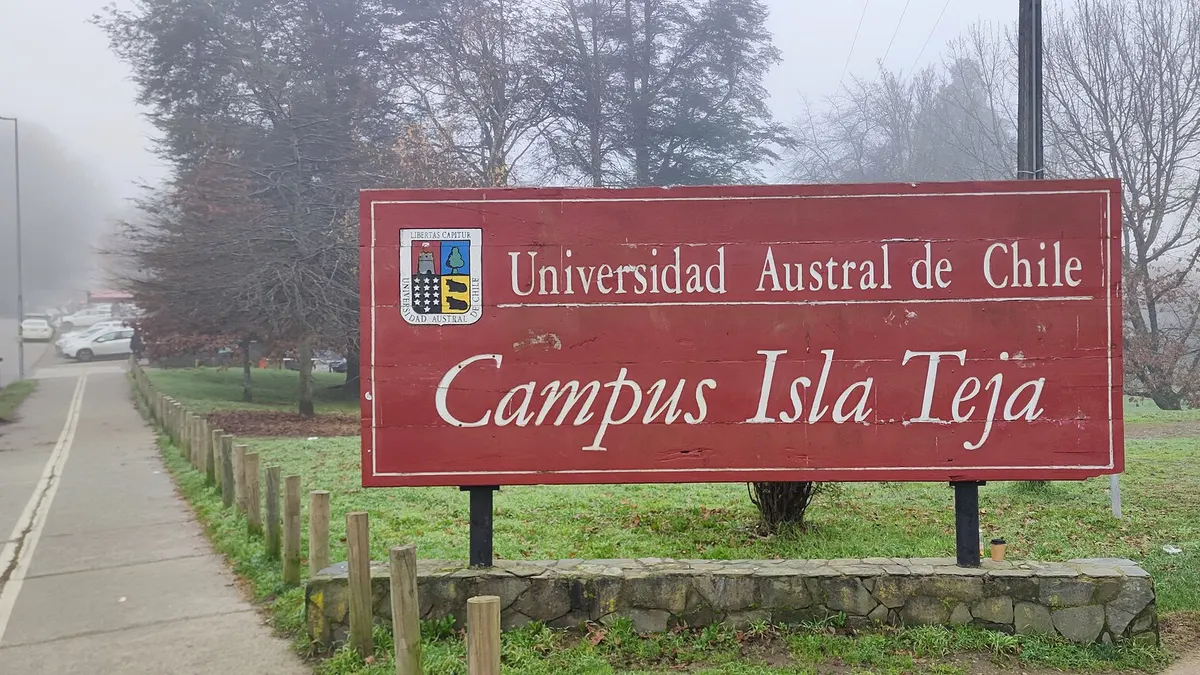
| Valdivia | UACh's Isla Teja campus, a city of rivers | Things to do in Valdivia |
| La Serena | 18,137 university students; mild weather all year | Things to do in La Serena |
Frequently asked questions
Can a foreigner take the PAES?
Yes, if their secondary education has been recognised or validated in Chile through the Ministry of Education's recognition of studies procedure (ChileAtiende).
Can I apply for the student visa while in Chile as a tourist?
No. According to SERMIG, the student temporary residence can only be applied for from abroad.
Can I work on a student visa?
Yes, up to 30 hours a week, without additional authorisation.
How much does it cost to study in Chile per year?
Average tuition for an on-campus university programme was CLP 5.6 million a year in 2025, plus the enrolment fee. For living costs, a room starts at about CLP 160,000 a month in Concepción and a one-bedroom flat at about CLP 300,000 in central Santiago.
Are there programmes in English?
In the Universidad de Chile special admission route, programmes are taught in Spanish only. Some exchange or postgraduate programmes have courses in English, but undergraduate degrees are in Spanish.