Viña del Mar is Chile's best-known beach city. It sits on the central coast, in the Valparaíso region, over the basins of the Reñaca and Marga Marga streams and on the shore of Valparaíso Bay, according to Wikipedia. It is known as the garden city for its parks and tree-lined avenues, and hosts the Viña del Mar Song Festival, the most important in Latin America.
Viña del Mar highlights
| Place | What it is | Key fact |
|---|---|---|
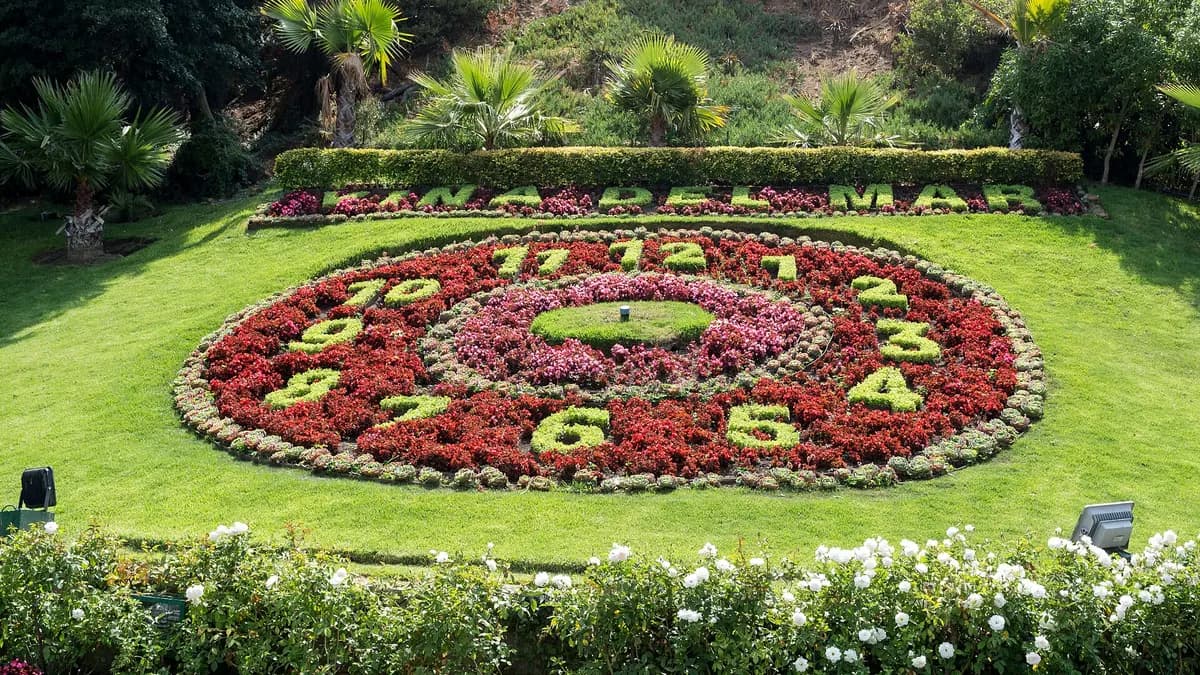
| Flower Clock | Monumental clock made of flowers | The city's most photographed symbol |
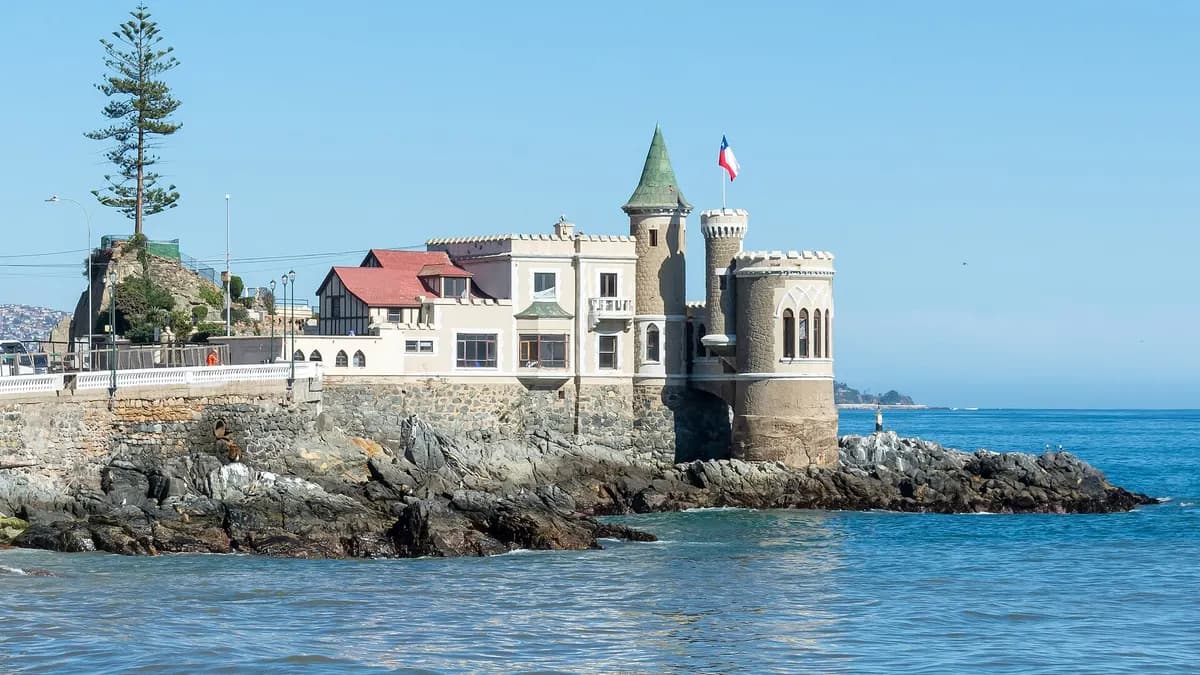
| Wulff Castle | Castle on the coastal rocks | Av. Marina 37; since 2005 home to the city's Heritage Unit |
| Quinta Vergara | Park with the Vergara palace and the amphitheater | Home of the Viña del Mar Festival |
| Rioja Palace | Palace and park | Historic Monument since 1985; Decorative Arts Museum since 1979 |
| Reñaca | Beach and residential area | The busiest beach in the municipality |
The Flower Clock and the waterfront
The Flower Clock (Reloj de Flores), opposite Caleta Abarca beach, is Viña del Mar's classic postcard: a working clock with numbers and face made of flowers that are changed with the season. From there you can walk north along Avenida Marina, with views of the sea.
A short walk away is Wulff Castle, at Avenida Marina 37, between the mouth of the Marga Marga stream and Caleta Abarca beach. Built on the rocks, it is one of the most recognizable buildings on the coast, and since 2005 it has housed the Heritage Unit of the Viña del Mar municipality.
Quinta Vergara and Rioja Palace
Quinta Vergara is a park with gardens and century-old trees, home to the Vergara palace and the amphitheater where the Viña del Mar International Song Festival is held each year, considered the largest and most important music festival in Latin America. Outside festival dates, the park is open to visitors.
Rioja Palace, on Quillota street between 3 and 4 Norte, is another classic visit. The palace and its park were declared a Historic Monument in 1985, and since 1979 it has housed the Decorative Arts Museum, with furnished rooms from the early 20th century.
Does your hotel, restaurant or tour in Viña del Mar want to reach travelers planning a visit to the central coast?
See advertising formatsViña del Mar's beaches
Viña has urban beaches along the entire coast, from Caleta Abarca, the closest to downtown, to Reñaca, a coastal area with a tourist and residential role that is part of Greater Valparaíso. The Pacific water is cold all year, so many visitors come more for the sand, the promenade and the restaurants than for swimming.
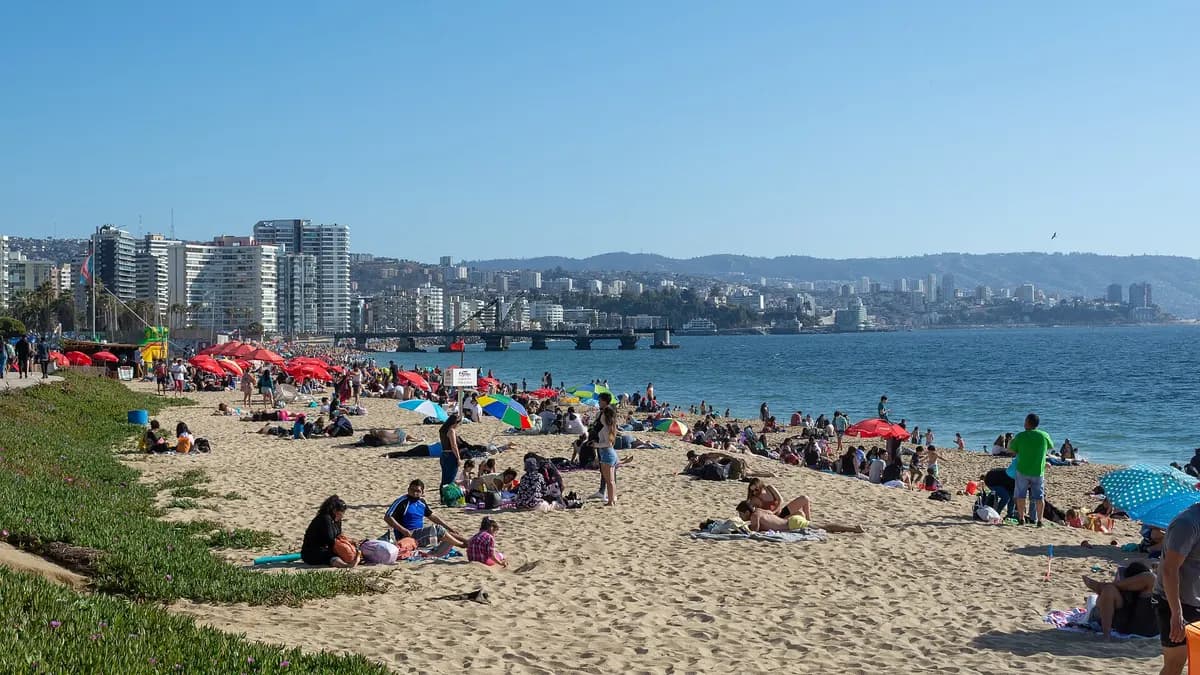
- Caleta Abarca: next to the Flower Clock, ideal if you don't have a car.
- Avenida Perú and Avenida San Martín beaches: downtown, with hotels and restaurants opposite.
- Reñaca: the busiest in summer, with dunes and buildings stepped up the hillside.
- For surfing: the central coast has better waves at other beaches; see our guide to surfing in Chile.
Viña del Mar and Valparaíso on the same trip
Viña del Mar and Valparaíso are next to each other, linked by the waterfront and by the Valparaíso Metro, an urban train along the coast. The usual plan is to sleep in Viña and spend a day exploring Valparaíso's hills, whose historic quarter is a World Heritage Site. Our Valparaíso one-day guide maps out the route.
How to get there and when to go
From Santiago, buses leave every few minutes from the Alameda and Pajaritos terminals, for a trip of around an hour and a half. By car, take Route 68. Summer, from December to February, is high season; the Festival is held in February and fills the hotels. In spring and autumn there are fewer people, and on the way from Santiago you can visit the wineries of the Casablanca valley, which we cover in our wine route.
One-day itinerary in Viña del Mar
| Time | What to do |
|---|---|
| Morning | Flower Clock, Wulff Castle and a walk along Avenida Marina |
| Midday | Lunch by the sea or downtown |
| Afternoon | Quinta Vergara and Rioja Palace |
| Sunset | Beach at Reñaca or on Avenida San Martín |
If you have a second day, spend it in Valparaíso, across the bay, or on the coast further north, where Concón and its dunes are known for their seafood empanada spots. In summer, traffic between Viña and Reñaca is slow in the afternoons, so it's best to move early.
Frequently asked questions
Where is the Viña del Mar Flower Clock?
Opposite Caleta Abarca beach, at the start of Avenida Marina, steps from Wulff Castle.
Can you visit Quinta Vergara?
Yes, the park is open to the public outside the dates of the Viña del Mar Festival.
How long does it take to get from Santiago to Viña del Mar?
Around an hour and a half by bus or by car on Route 68, depending on traffic.