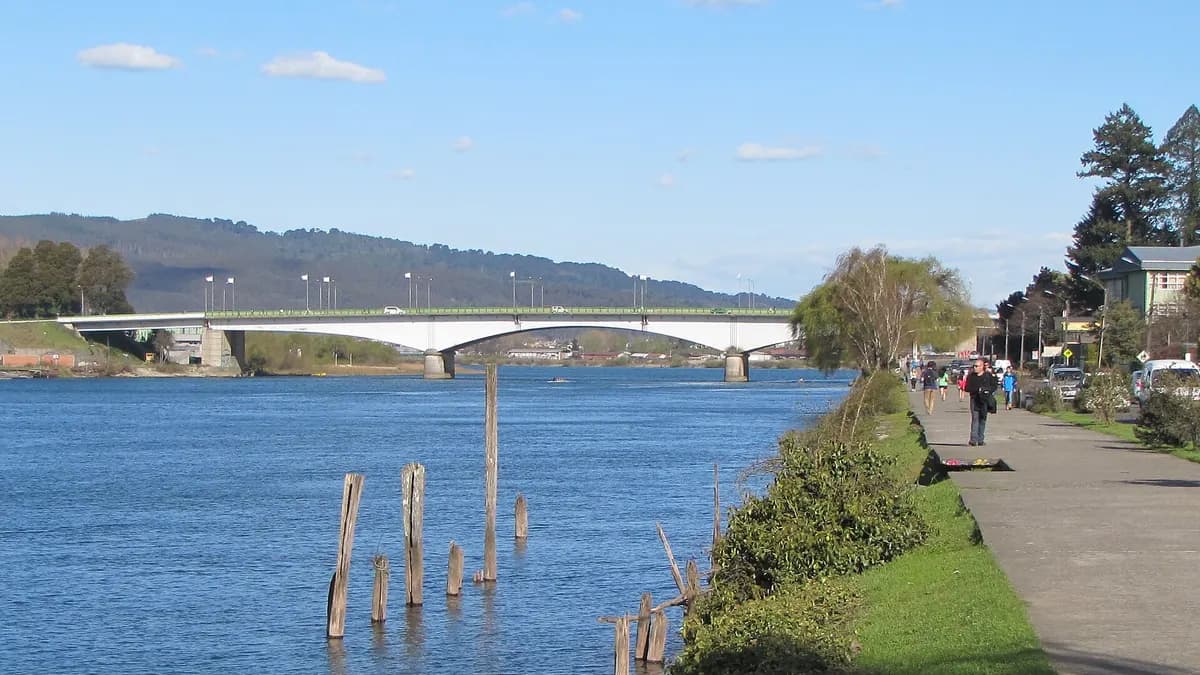
Valdivia, capital of the Los Ríos Region, is a city built around water. The Calle-Calle, Valdivia and Cau-Cau rivers surround it, and many of its activities happen on the waterfront or on a boat. It was founded in 1552 and is one of the oldest cities in the country, although much of its architecture was lost in the 1960 earthquake, the strongest ever recorded.
Today it is a university town with a German heritage, breweries, Spanish forts at the river mouth and wetlands full of birds. This guide sums up things to do in Valdivia in two or three days.
Things to do in Valdivia: downtown and the waterfront
| Place | What it is | Key fact |
|---|---|---|
| Mercado Fluvial | Fish, seafood and produce market | On the Arturo Prat waterfront |
| Waterfront sea lions | Colony that comes up to the market | Watched from the riverbank |
| Arturo Prat waterfront | Promenade along the Valdivia River | Departure point for boat trips |
| Torreón Los Canelos | Colonial defensive tower | Built in 1781 |
| Isla Teja | University district across the bridge | Museums and botanical garden |
The classic walk starts at the Mercado Fluvial, by the waterfront. Fishermen sell their catch there and sea lions come close waiting for scraps; watch them from the bank, without feeding or touching them. River boat trips leave from the same waterfront. Downtown also keeps remains of the colonial city, such as the Torreón Los Canelos, from 1781.
Isla Teja: museums and botanical garden
Across the Pedro de Valdivia bridge is Isla Teja, home to the Universidad Austral de Chile campus. Its botanical garden gathers native species of the temperate rainforest and is a good walk in any season. On the riverbank are the Maurice van de Maele Historical and Anthropological Museum, in an old Anwandter family mansion, and the Museum of Contemporary Art, built on the remains of an old brewery destroyed in 1960.
Does your hotel, brewery or boat company in Valdivia want to reach travelers planning southern Chile?
See advertising formatsThe Niebla and Corral forts
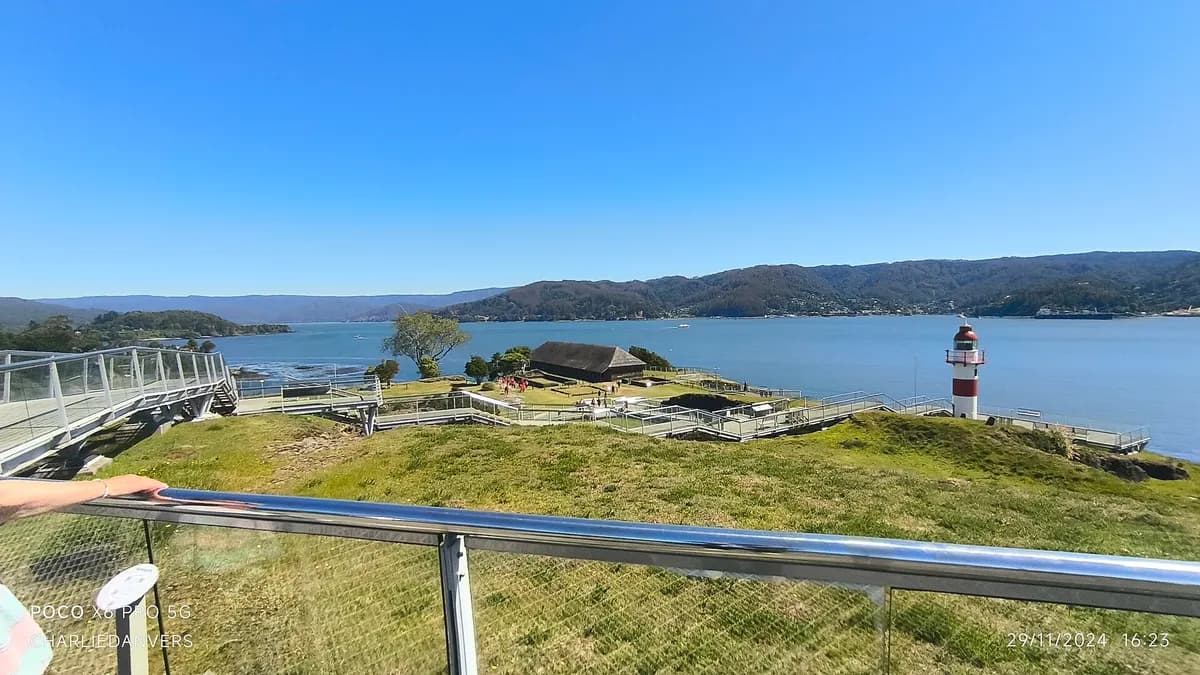
During colonial times, the Spanish crown built a system of forts in Corral bay to defend Valdivia. Several can be visited in a day:
| Fort | Location | How to get there |
|---|---|---|
| Castillo de Niebla | Niebla, about 18 km from Valdivia | Bus or car along the coastal road |
| Castillo San Sebastián de la Cruz | Corral | Boat or ferry from Niebla |
| Castillo de San Pedro de Alcántara | Isla Mancera | Boat from Niebla or Corral |
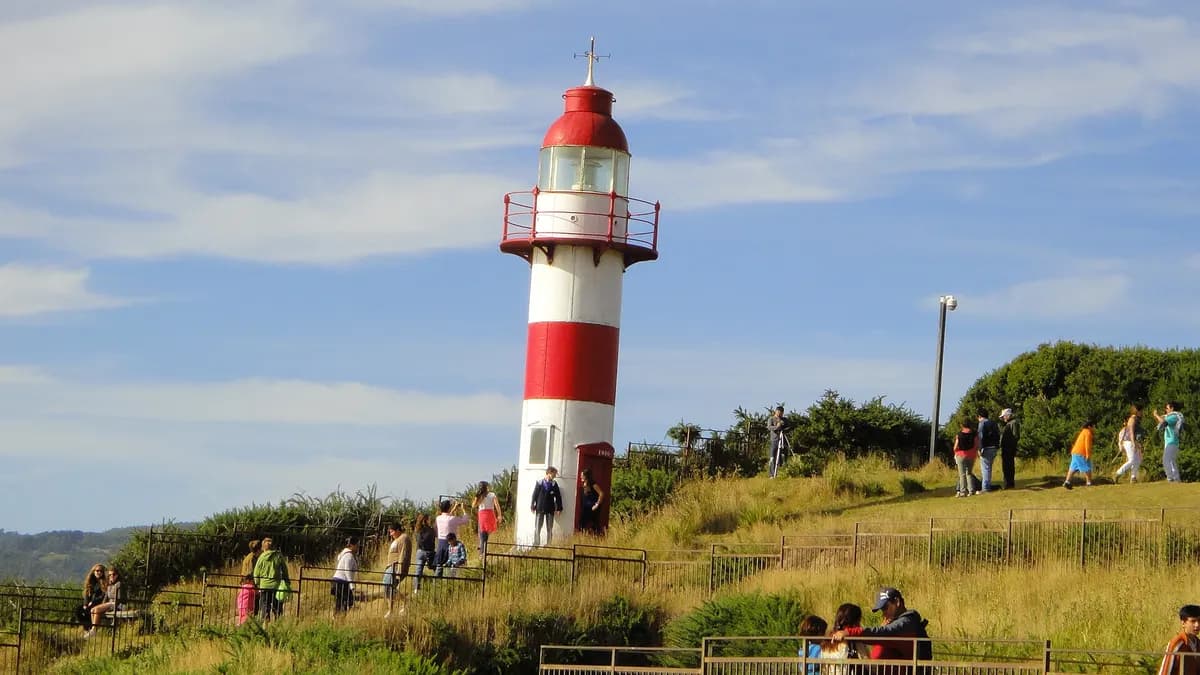
The Castillo de Niebla works as a site museum and has one of the best views of the bay. From Niebla, boats cross to Corral, home of the San Sebastián de la Cruz fort. Another option is to do the whole route by water from Valdivia on the river cruises that sail downstream. Check museum hours before going, as they usually close one or two days a week.
Nature and beer: things to do in Valdivia nearby
- Carlos Anwandter Nature Sanctuary: the Cruces River wetland, north of the city, was Chile's first Ramsar site, in 1981. It is famous for its black-necked swans and is explored on guided boat trips.
- Parque Oncol: Valdivian rainforest in the Coastal Range, with trails and a lookout that, on clear days, shows several volcanoes.
- Beer route: on the road to Niebla are the Kunstmann brewery and other craft breweries. More ideas in our craft beer route in southern Chile.
- Coastal beaches: Niebla, Los Molinos and Curiñanco are good for walks in summer, although the water is cold.
A two-day itinerary and what to eat
| Day | Morning | Afternoon |
|---|---|---|
| 1 | Mercado Fluvial, sea lions and waterfront | Isla Teja: botanical garden and museums; beer downtown |
| 2 | Boat or bus to Niebla and its fort | Boat to Corral and Isla Mancera; return via the beer route |
The legacy of German settlers who arrived in the mid-19th century shows at the table: kuchen with southern fruit, cured meats and, above all, beer. The sea provides fresh seafood and fish, bought at the Mercado Fluvial or eaten at the cookshops of Niebla and Corral. In summer, the Noche Valdiviana, in February, fills the river with lit-up boats and fireworks; it is the city's biggest festival and lodging should be booked well ahead.
For sleeping, downtown and the waterfront let you do almost everything on foot. Isla Teja is quieter and just a bridge away. Niebla, on the coast, is a good alternative if you want cabins near the sea.
When to go and how to get there
| Season | Weather | What to expect |
|---|---|---|
| December to March | Drier and mild | High season; Noche Valdiviana in February |
| April to May | Rainy autumn | Colorful forests and fewer people |
| June to August | Rainy and cold | Quiet city, good for museums and breweries |
| September to November | Changeable spring | Birds in the sanctuary and lower prices |
Valdivia is one of the rainiest cities in Chile, so bring a waterproof jacket in any season. It is about 840 km south of Santiago: fly to Pichoy airport, some 30 km from the city, or take an overnight bus. It pairs well with Puerto Varas, about three hours away, and with the southern hot springs. To understand the weather by region, see when to visit Chile.
Frequently asked questions
How many days do you need in Valdivia?
Two days cover downtown, Isla Teja and a trip to Niebla and Corral. A third day adds the Carlos Anwandter sanctuary or Parque Oncol.
Where can you see sea lions in Valdivia?
Next to the Mercado Fluvial, on the Arturo Prat waterfront. They can also be seen on river boat trips.
What to do in Valdivia when it rains?
Visit the Isla Teja museums, tour the breweries and take a covered boat trip on the river.