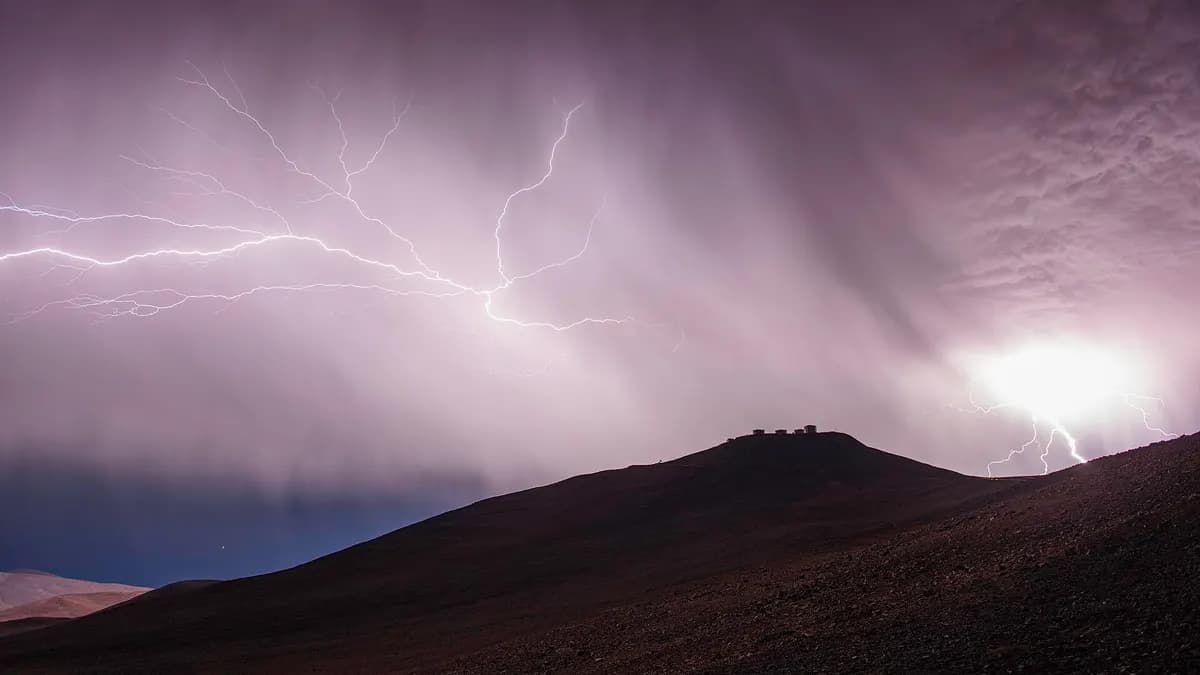
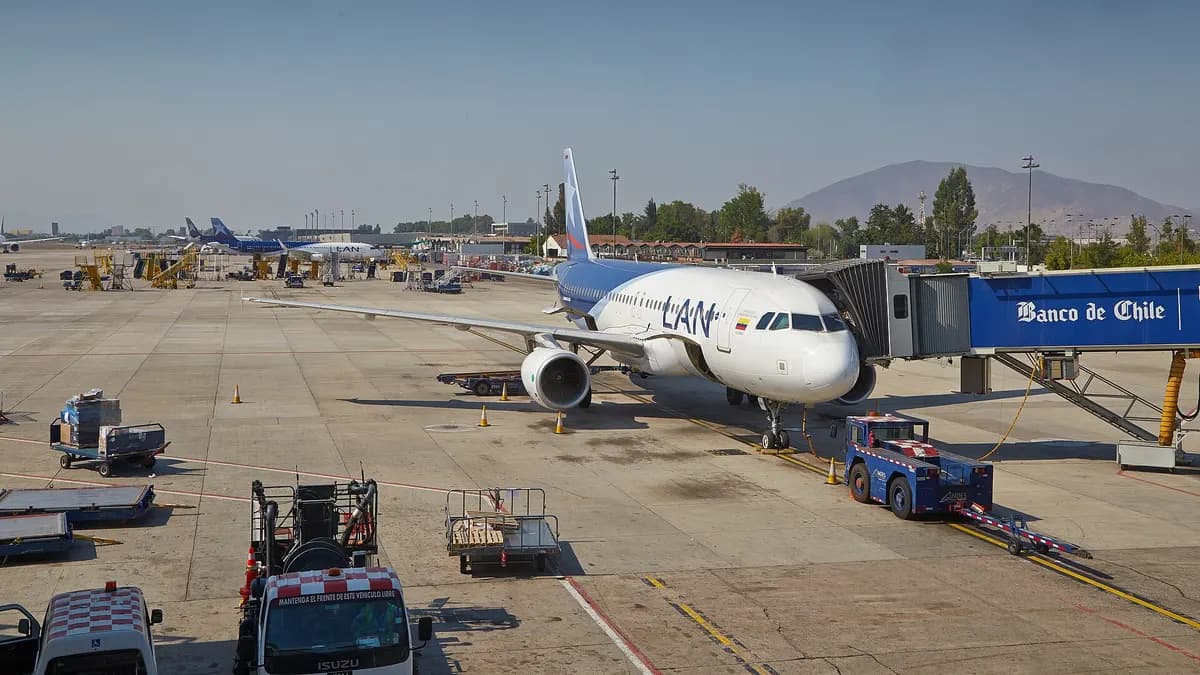
Lightning struck LATAM flight LA341, from Antofagasta to Santiago, on Tuesday, October 20, 2026, during the weather front that was hitting central Chile. The plane landed normally at Santiago airport and all passengers disembarked safely, the airline said in a statement quoted by T13.
A video recorded by a passenger, which spread on social media, shows a flash lighting up the cabin and a loud bang. LATAM explained that its aircraft "are designed and certified" for this phenomenon and have systems that dissipate the discharge safely, according to Ladevi.
What we know about the lightning strike on the LATAM flight
| Item | Details |
|---|---|
| Flight | LATAM LA341 |
| Route | Antofagasta-Santiago |
| Date | Tuesday, October 20, 2026 |
| Context | Weather front with thunderstorms in central Chile |
| Outcome | Normal landing in Santiago; passengers and crew disembarked safely |
| Injuries | None reported |
Sources: LATAM statement quoted by T13 and Ladevi, October 21, 2026. The airline did not disclose the aircraft model or the number of passengers.
What happens when lightning hits an aircraft
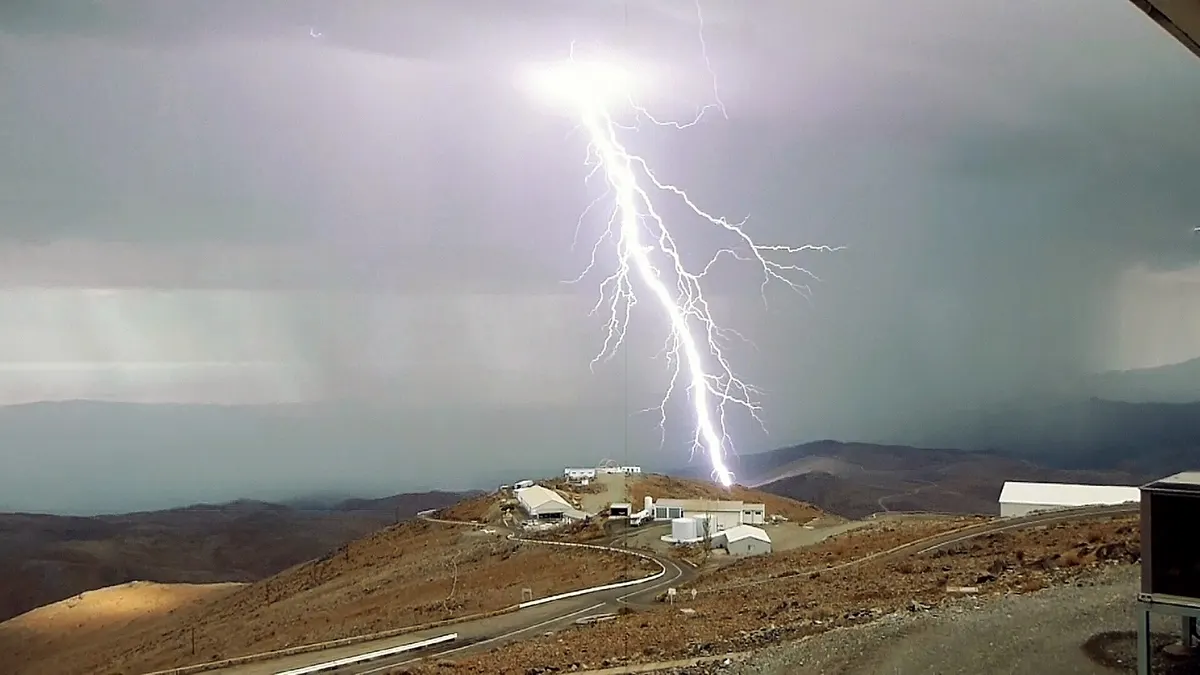
According to manufacturer Airbus, in its technical magazine Safety First, every aircraft in service is struck by lightning at least once a year on average, or once every 3,000 flight hours. That is far more than chance would suggest, because the aircraft itself helps trigger the discharge: when it flies near a charged area, discharges leave its extremities (the nose, wing tips and tail) and join the lightning leader.
- The fuselage conducts the current: all parts of the structure, metal or composite, are electrically bonded so the current runs along the outside of the plane and exits at another extremity.
- The cabin is protected: the effect is similar to a Faraday cage; the discharge does not pass through the inside where passengers sit.
- Systems are shielded: regulations require that lightning must not disturb any critical aircraft system.
- Damage is usually minor: there may be marks, small burns or holes at the entry and exit points, which are checked on the ground.
| Technical fact | Value | Source |
|---|---|---|
| Strike frequency | At least 1 lightning strike per aircraft per year on average | Airbus, Safety First (2023) |
| Flight hours between strikes | About 3,000 | Airbus, Safety First (2023) |
| Most common altitude | Between 5,000 and 15,000 feet (1,500 to 4,600 metres), or on the ground | Airbus, Safety First (2023) |
| Lightning strikes per km² per year worldwide | 3 on average | Airbus, Safety First (2023) |
The 5,000 to 15,000 feet band is the one an aircraft crosses during climb and approach, which fits the account of LA341 passengers, who saw the flash a few minutes before arriving in Santiago.
Does your tourism business want to reach travellers moving around Chile?
See advertising optionsWhat is checked after lightning hits an aircraft
The crew must record the event in the aircraft logbook with as much detail as possible: the flight phase, any system faults and which alerts appeared. Maintenance staff then carry out an inspection to find the discharge's entry and exit points, assess the damage and repair it before the aircraft flies again, following the procedure described by Airbus.
| Moment | What happens |
|---|---|
| Before the strike | The aircraft flies near a charged area; discharges leave the nose, wings or tail and join the lightning |
| During the strike | The current enters at one extremity, runs along the outer structure and exits at another; on board there is a flash and a bang |
| After the strike | The crew logs it and the aircraft continues its flight normally |
| On the ground | Maintenance inspects the entry and exit points and repairs them before the next flight |
Source: Airbus, Safety First, November 2023. A single lightning flash can have several successive pulses; because the aircraft is moving, the current can leave several marks along the fuselage.
What passengers can do during storms
- Keep your seatbelt fastened: the lightning itself is not dangerous for those on board, but storms often bring turbulence.
- Check your flight status: with storms near the airport, ground operations are suspended for safety and there may be delays.
- Follow weather warnings: in October 2026 central Chile had several days of thunderstorms; check our articles on the October weather front before travelling.
To see the busiest routes in the country, including Santiago-Antofagasta, check our ranking of Chile's busiest air routes.
Frequently asked questions
Is it dangerous for lightning to hit a plane?
Commercial aircraft are designed and certified to withstand lightning without affecting critical systems. The current runs along the outside of the fuselage and exits at another point.
How often is a plane struck by lightning?
According to Airbus, at least once a year on average per aircraft in service, or about every 3,000 flight hours.
Which LATAM flight was struck by lightning?
LA341, from Antofagasta to Santiago, on Tuesday, October 20, 2026. It landed normally.