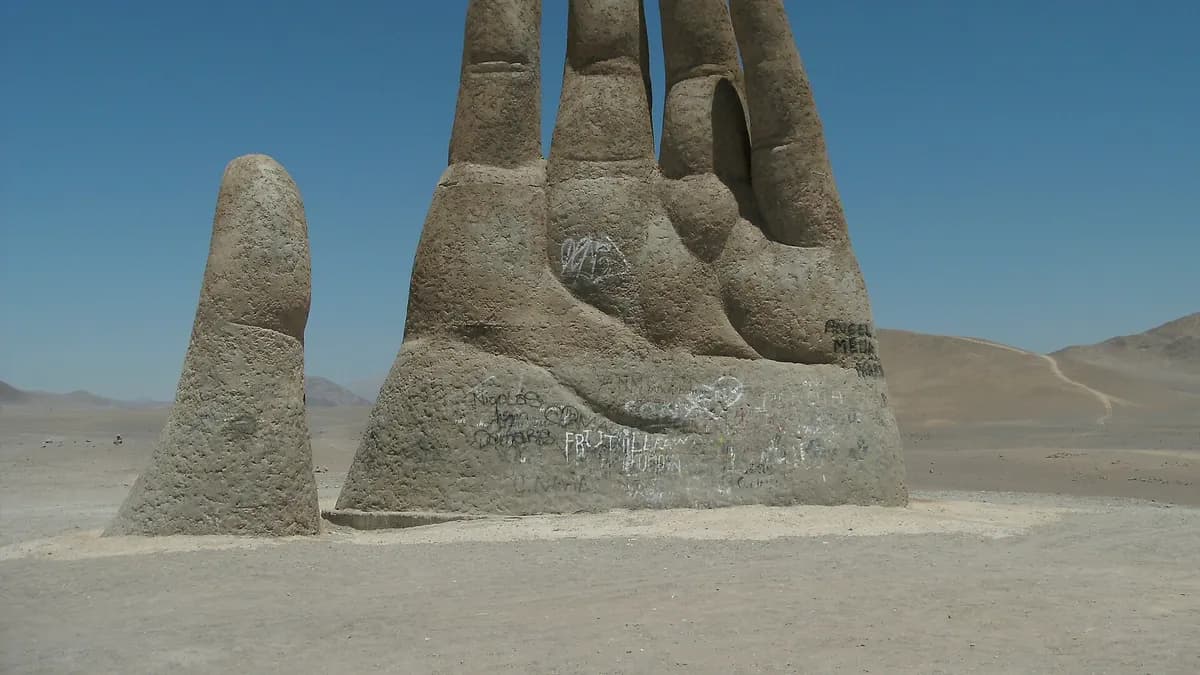
The Hand of the Desert (Mano del Desierto) is an 11-meter reinforced-concrete sculpture rising from the sand 75 kilometers south of Antofagasta, about 300 meters off Route 5 North. It was created by Chilean sculptor Mario Irarrázabal and unveiled on March 28, 1992. It stands at about 1,100 meters above sea level and is one of the most photographed stops on the Pan-American Highway, according to Wikipedia, which cites the newspaper La Estrella de Antofagasta.
*Updated October 30, 2026.* There is no ticket office and no opening hours: it is an open site next to the highway. Even so, in the middle of the desert you should travel with water, fuel and a full tank.
Key facts about the Hand of the Desert
| Fact | Value | Source |
|---|---|---|
| Artist | Mario Irarrázabal, Chilean sculptor | Wikipedia |
| Unveiled | March 28, 1992 | Wikipedia (La Estrella de Antofagasta) |
| Height | 11 meters | Wikipedia |
| Material | Reinforced concrete | Wikipedia |
| Altitude | About 1,100 m above sea level | Wikipedia |
| Location | 75 km south of Antofagasta, 300 m from Route 5 North | Wikipedia |
| Funding and upkeep | Corporación Pro Antofagasta | Wikipedia |
| Admission | Free, no opening hours | Open site by the highway |
Main source: Wikipedia, with references to La Estrella de Antofagasta. Corporación Pro Antofagasta funded the work and runs clean-ups, because the sculpture is frequently covered in graffiti.
How to get to the Hand of the Desert
The usual way is by car from Antofagasta. Leave the city on Route 26 or Route 28, which connect with Route 5, and head south. The nearest landmark is the La Negra business park. The sculpture is visible from the highway and a short dirt track leads to its base.
| From | Route | Distance | Detail |
|---|---|---|---|
| Antofagasta | Route 26 or 28, then Route 5 south | 75 km | About an hour by car |
| La Negra business park | Route 5 south | — | Nearest landmark |
| Route 5 North | Dirt track | 300 m | To the base of the sculpture |
Distances: Wikipedia. The travel time is our estimate for a paved road without traffic. No public transport stops at the sculpture; some Antofagasta tours include it. If you are driving the Pan-American from the south, it is a must-stop before reaching the city; we describe the full route in from Santiago to San Pedro de Atacama on Route 5.
What the Hand of the Desert means
Irarrázabal has said each visitor can give it their own interpretation. Some read it as the city waving goodbye to travelers; others as a tribute to the victims of injustice and torture during the 1973-1990 dictatorship, as Wikipedia notes. The sculptor made similar works elsewhere: the best known is La Mano in Punta del Este, on Uruguay's Playa Brava, from 1982, and he has also worked in Madrid, Venice and Puerto Natales.
| Work by Irarrázabal | Place | Year or detail |
|---|---|---|
| La Mano (Los Dedos) | Playa Brava, Punta del Este (Uruguay) | 1982 |
| Mano del Desierto | Atacama Desert, Antofagasta (Chile) | 1992 |
| Sculptures of hands and figures | Madrid, Venice and Puerto Natales | According to Wikipedia |
Do you run a hotel, a tour or an agency in Antofagasta? Reach travelers planning northern Chile, in four languages.
See advertising optionsWhen to visit the Hand of the Desert: day and night
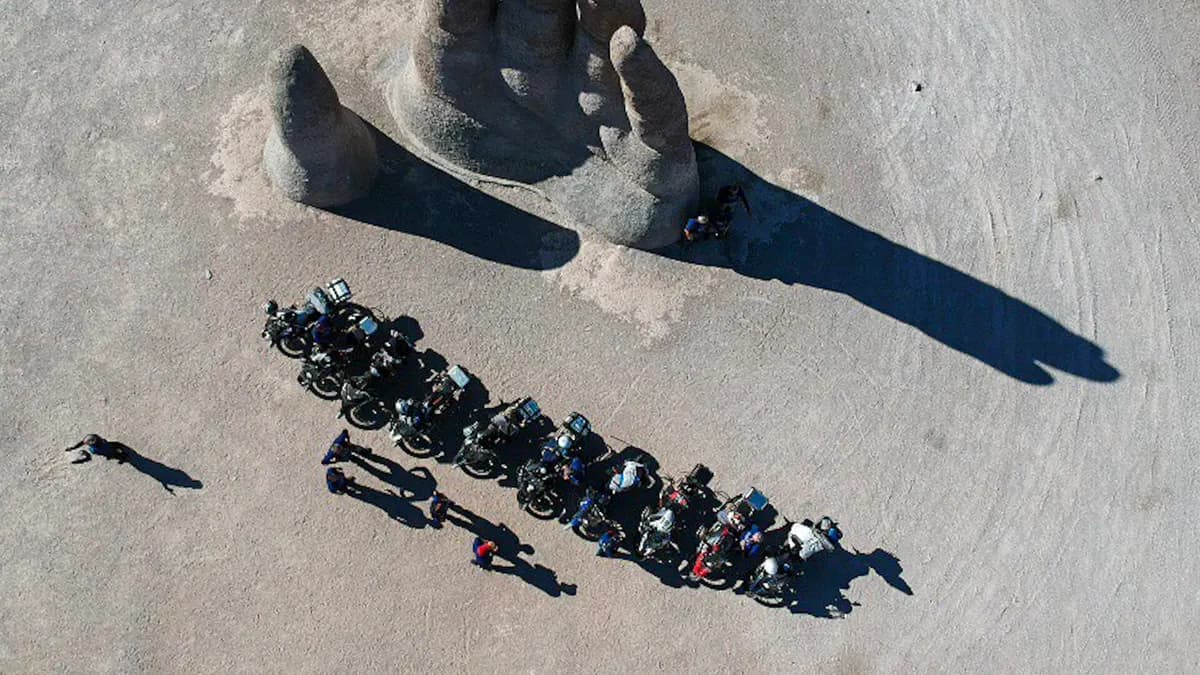
You can visit year-round, because it practically never rains in this part of the desert. At midday the sun is harsh and the light is hard for photos; the best times are late afternoon and sunset, when the sculpture casts a long shadow on the sand.
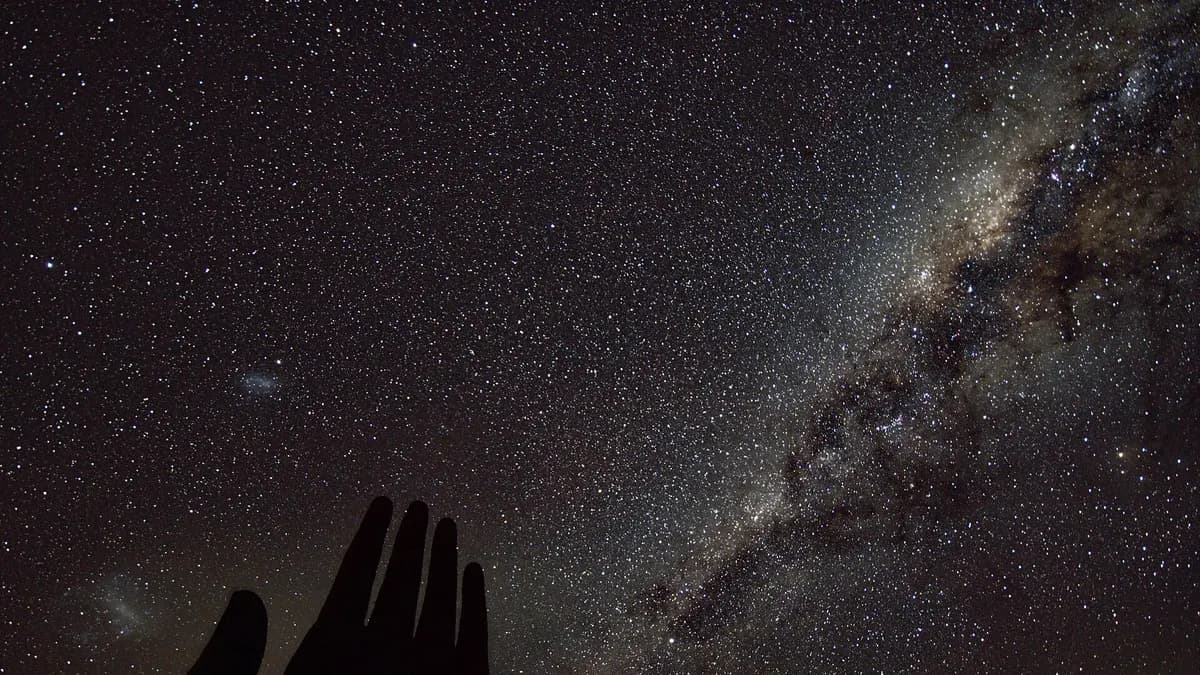
At night it is an astrophotography classic: with no lights nearby, the Milky Way rises above the sculpture's fingers. Wikipedia notes the site was considered a Starlight tourist destination until 2018. To photograph the sky, go on moonless nights with a tripod and warm clothes, because the temperature drops sharply. More ideas in stargazing in the Elqui Valley.
Tips for visiting the Hand of the Desert
- Water and fuel: services are scarce on this stretch of Route 5; leave Antofagasta with a full tank.
- Sunscreen and a hat: there is no shade on site.
- Do not write on it: graffiti is the main problem the work faces and forces frequent clean-ups.
- Park carefully: use the dirt track and do not stop on the highway shoulder, where trucks drive at high speed.
- At night, go with company: the place is isolated; go with others and share your route.
The Hand pairs well with a tour of the region: Antofagasta's waterfront, the saltpeter works of Humberstone and Santa Laura further north and, inland, San Pedro de Atacama and the Valle de la Luna.
Frequently asked questions
Where is the Hand of the Desert?
75 kilometers south of Antofagasta, about 300 meters from Route 5 North, in the Atacama Desert.
How tall is the Hand of the Desert?
11 meters. It is made of reinforced concrete.
Who made the Hand of the Desert?
Chilean sculptor Mario Irarrázabal. It was unveiled on March 28, 1992.
Is there an entrance fee?
No. It is an open site by the highway, with no opening hours or ticket office.