Chile has the world's highest volcano, Ojos del Salado (6,893 meters), and the driest inhabited place on Earth, Arica, with an average of 0.76 millimeters of rain a year according to Guinness World Records. Add to that the deepest lake in the Americas, the largest glacier in the Southern Hemisphere outside Antarctica and the driest non-polar desert. This fact sheet gathers Chile's natural records with their figure and source.
*Updated on October 18, 2026.* If a measurement changes, we correct it on this same page.
Chile's natural records in one table
| Record | Place | Figure | Source |
|---|---|---|---|
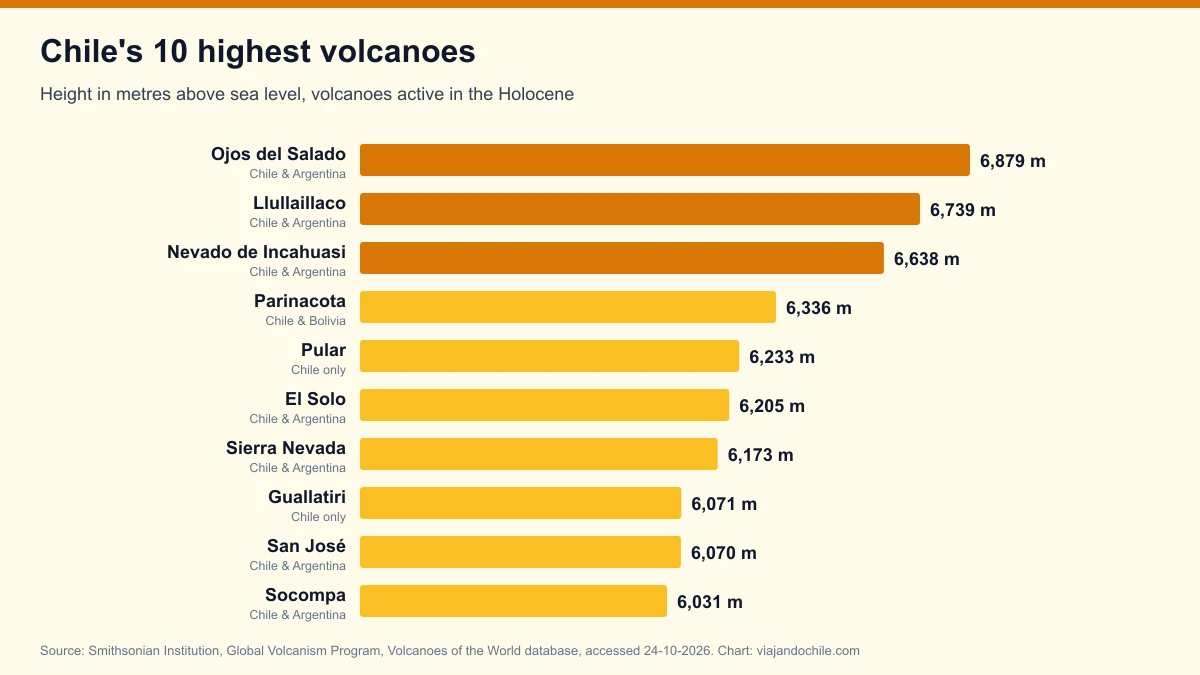
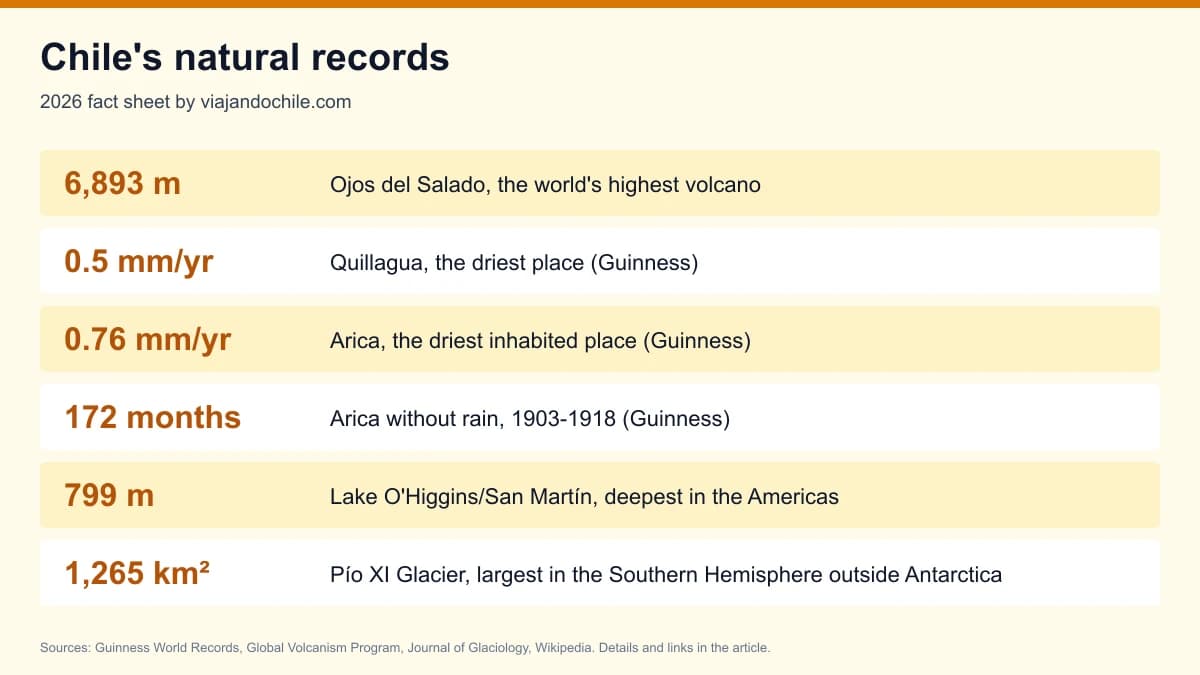
| World's highest volcano | Ojos del Salado (Atacama) | 6,893 m | Wikipedia; the Global Volcanism Program gives 6,879 m |
| Second-highest active volcano | Llullaillaco (Antofagasta) | 6,723 m | Wikipedia, based on the Global Volcanism Program |
| World's highest lake | Crater lake of Ojos del Salado | 6,480 to 6,500 m | Wikipedia |
| World's highest archaeological site | Summit of Llullaillaco | About 6,715 m | Wikipedia |
| Driest place in the world | Quillagua (Antofagasta) | 0.5 mm/year (1964-2001) | Guinness World Records |
| Driest inhabited place | Arica | 0.76 mm/year over 59 years | Guinness World Records |
| Longest dry spell | Arica | 172 months (Oct. 1903 to Jan. 1918) | Guinness World Records |
| Driest non-polar desert | Atacama Desert | About 105,000 km² | Wikipedia |
| Deepest lake in the Americas | Lake O'Higgins/San Martín | 799 m | Journal of Glaciology, 2023 |
| Largest glacier in the Southern Hemisphere outside Antarctica | Pío XI (Magallanes) | 1,265 km² | Wikipedia |
| World's second-largest contiguous extrapolar ice field | Southern Patagonian Ice Field | About 16,800 km² | Wikipedia |
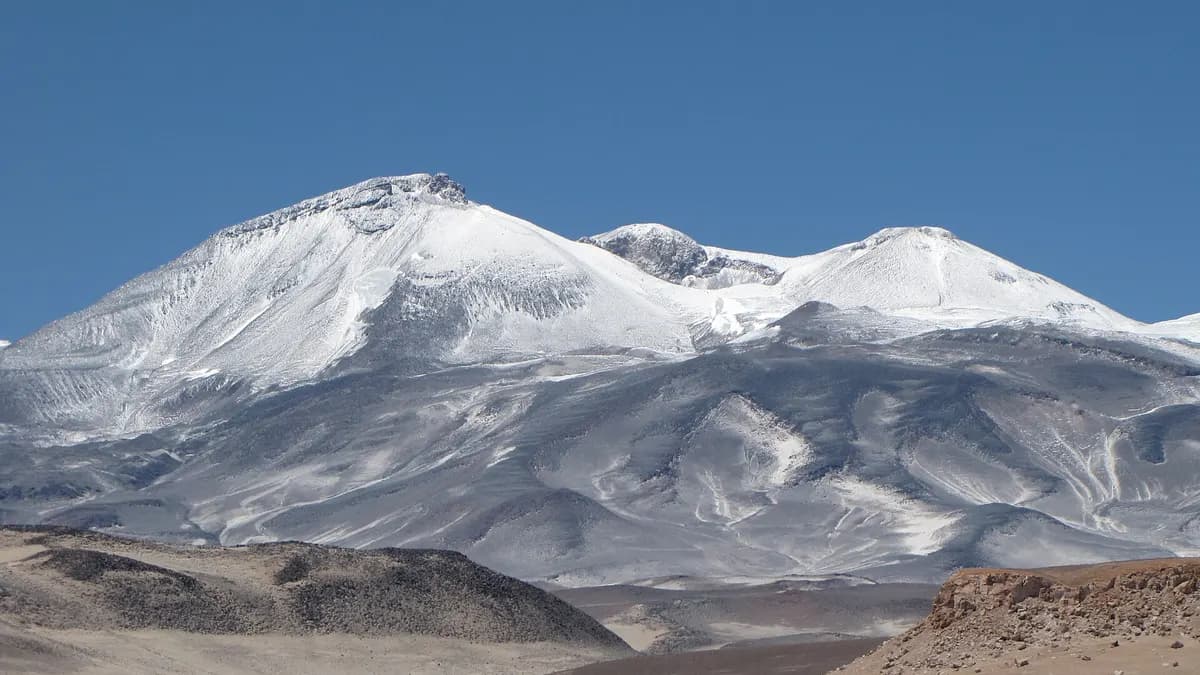
Ojos del Salado, the world's highest volcano
On the border with Argentina, in the Atacama Region, Ojos del Salado is the highest volcano on Earth and Chile's highest peak. Its height varies by measurement: 6,893 meters is the most cited figure, the Smithsonian's Global Volcanism Program uses 6,879, and a 1989 GPS survey gave 6,900 ± 5. Its last eruption was dated to around the year 750, give or take 250 years, and steam emissions were seen in 1993. Its crater holds a lake at about 6,480 to 6,500 meters, considered the highest lake in the world.
Further north, Llullaillaco (6,723 meters) is the second-highest active volcano, with an eruption recorded in 1877. In 1999, three mummified Inca children were found at its summit: it is the highest archaeological site in the world.
Arica and Quillagua, Chile's dryness records
Guinness World Records recognizes two records in northern Chile. The driest place is Quillagua, in the Antofagasta Region, where the weather station averaged 0.5 millimeters a year between 1964 and 2001. The longest sustained dry period belongs to Arica: not a drop fell between October 1903 and January 1918, 172 months. Guinness adds that Arica is the driest inhabited place, with 0.76 millimeters a year over 59 years.
Both lie in the Atacama Desert, the driest non-polar desert in the world, with about 105,000 km² and some stations that have never recorded rain. We explain it in our guide to the Atacama, the driest desert in the world. The paradox is that, in years with winter rain, the same desert bursts into bloom, as we reported in our story on the 2026 flowering desert.
Lakes and ice: southern Chile's natural records
Lake O'Higgins, shared with Argentina (where it is called San Martín), has a maximum depth of 799 meters and is the deepest lake in the Americas, according to a study published in 2023 in the Journal of Glaciology. It covers 1,013 km², about 554 of them in Chile. General Carrera Lake, Chile's largest, reaches 586 meters deep; the Marble Caves are on its shore.
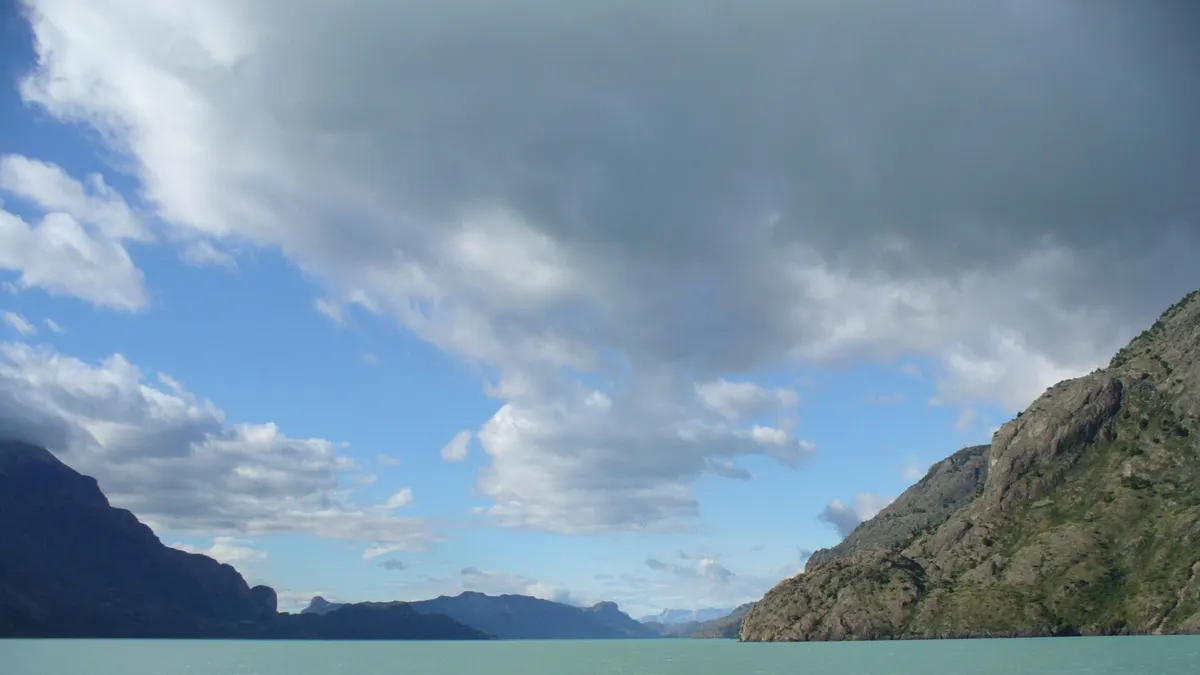
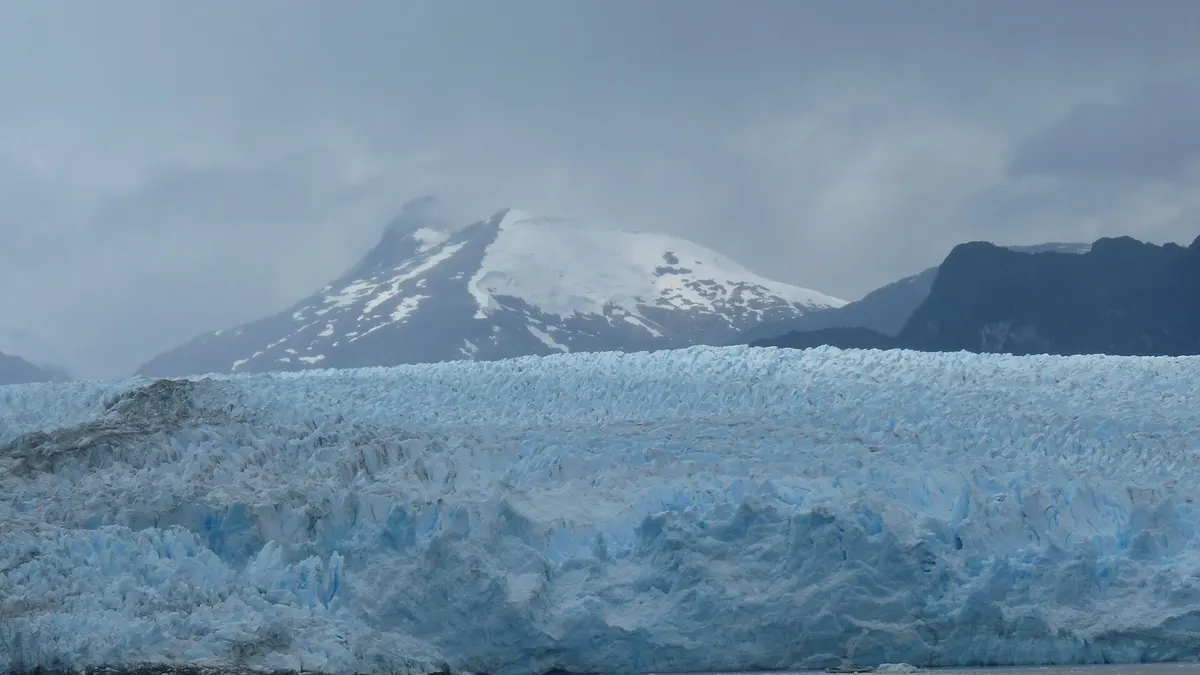
The Southern Patagonian Ice Field, about 16,800 km² and mostly in Chile, is the world's second-largest contiguous extrapolar ice field, after the one in Alaska and Canada. From it flows the Pío XI, or Brüggen, Glacier, at 1,265 km²: the largest in the Southern Hemisphere outside Antarctica.
Where Chile's natural records are
| Region | Records | Gateway |
|---|---|---|
| Arica y Parinacota | Driest inhabited place; longest dry spell | Arica |
| Antofagasta | Driest place (Quillagua); Llullaillaco; heart of the Atacama Desert | Calama and San Pedro de Atacama |
| Atacama | Ojos del Salado and its crater lake | Copiapó |
| Aysén | Lake O'Higgins; General Carrera Lake | Villa O'Higgins and Puerto Río Tranquilo |
| Magallanes and Aysén | Southern Patagonian Ice Field; Pío XI Glacier | Puerto Natales and fjord cruises |
| Record place | Can you visit? | How |
|---|---|---|
| Ojos del Salado | Yes, with high-altitude experience | Guided expeditions from Copiapó, in summer |
| Arica | Yes | Nonstop flight from Santiago |
| Quillagua | Yes, passing through | On Route 5, between Iquique and Antofagasta |
| Lake O'Higgins | Yes | End of the Carretera Austral, at Villa O'Higgins |
| Pío XI Glacier | Yes, by boat | Cruises through the Patagonian fjords |
Records that get repeated but have no backing
- "Chile's longest beach": we found no official measurement that gives the title to any particular beach.
- "The highest active volcano": it depends on the definition. Ojos del Salado is listed among Holocene volcanoes but has no historical eruptions; Llullaillaco does.
- "The driest desert in the world": the Atacama is the driest of the non-polar deserts; Antarctica's dry valleys are drier.
If you want to see these places, check our guides to things to do in Arica, to the Carretera Austral, which runs near General Carrera Lake and ends at Villa O'Higgins, and to what to see in Chilean Patagonia.
How to cite this data
Viajando Chile (2026). "Chile's natural records in 2026: the highest volcano, the driest place and the deepest lake". viajandochile.com. https://viajandochile.com/en/news/chile-natural-records
Frequently asked questions
What is the highest volcano in the world?
Ojos del Salado, on the border between Chile and Argentina, at 6,893 meters according to the most cited figure (6,879 according to the Global Volcanism Program).
What is the driest place in the world?
According to Guinness World Records, Quillagua, in northern Chile, with 0.5 mm of rain a year. Arica is the driest inhabited place, with 0.76 mm a year.
What is the deepest lake in Chile?
Lake O'Higgins, shared with Argentina, with a maximum depth of 799 meters. It is also the deepest in the Americas.