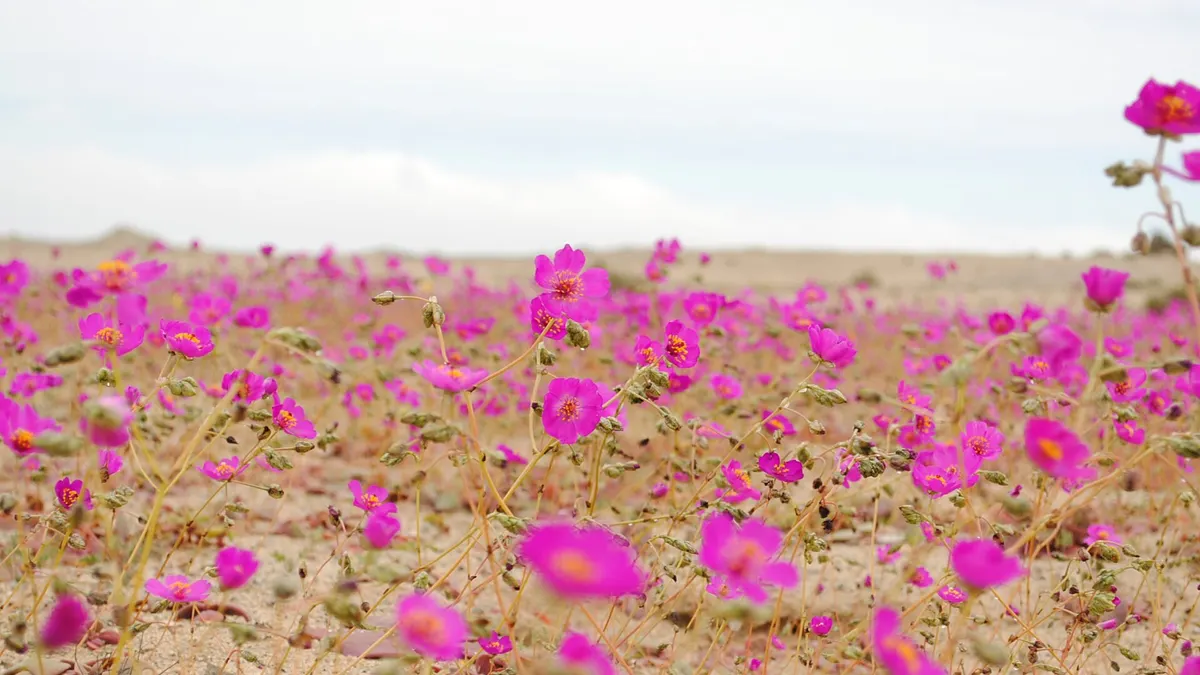
The 2026 flowering desert is at its best. Sernatur projected the greatest diversity and abundance of flowers for mid-October, and this week the Atacama Region showed the effect on tourism: two of its destinations are among the four with the highest occupancy in the country, as reported on October 16 by Radio Maray.
The season was officially launched in early October at the Piedras Grandes sector in Freirina. According to Sernatur, technical reports from Conaf and the Biodiversity and Protected Areas Service (SBAP) project a minimum bloom area of about 17,667 km², close to 23% of the region's territory.
The tourism boost from the 2026 flowering desert
| Destination | 2026 occupancy | National rank |
|---|---|---|
| Bahía Inglesa - Pan de Azúcar National Park | 75.2% | 3rd |
| Copiapó Valley and Atacama Cordillera | 74.3% | 4th |
| Huasco Valley and Desert Cetaceans | 69.8% | — |
| National average | 52.2% | — |
The figures come from a 2026 occupancy study covering 54 destinations, cited by Radio Maray. In the 45 comparable destinations, average occupancy rose from 49.8% in 2023 to 53.5% in 2026. The outlet did not publish visitor numbers. Sernatur's regional director, Alejandro Martín, said the goal is to keep interest high and prepare the 2027 summer season.
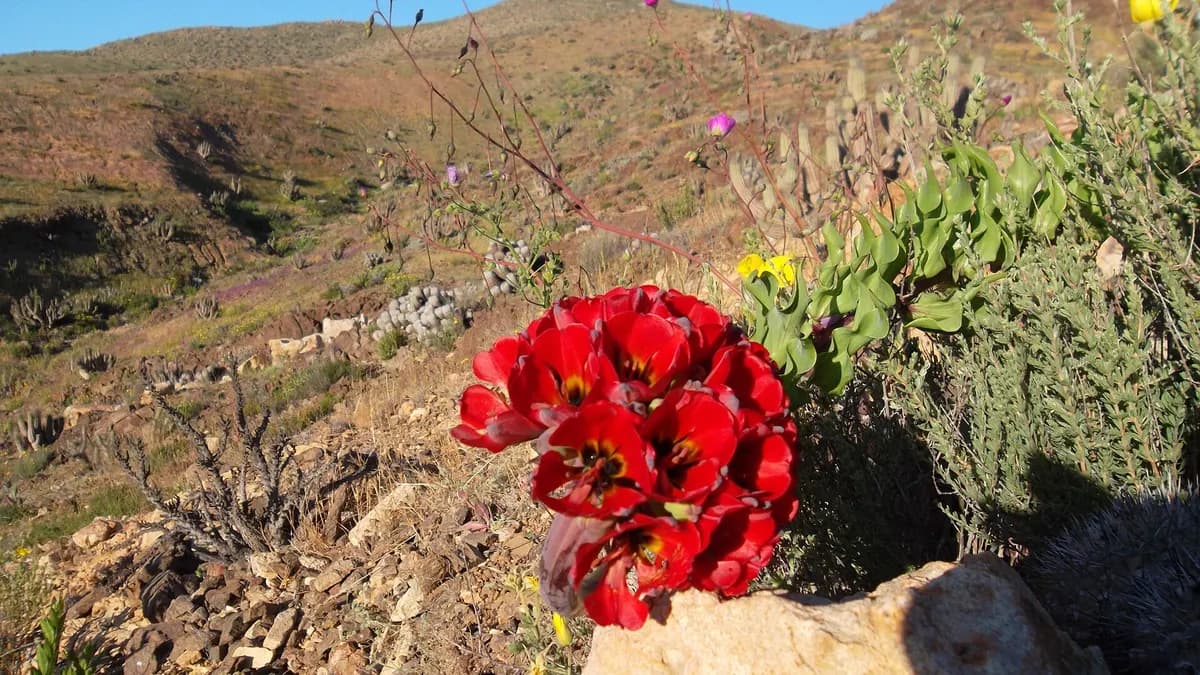
Where to see the 2026 flowering desert
The areas with the greatest sighting potential identified by the authorities are in the municipalities of Chañaral, Caldera, Copiapó, Vallenar, Freirina and Huasco, with some spots in Tierra Amarilla. These are the sectors recommended by Sernatur and Conaf:
| Sector | Municipality or area | Type of visit |
|---|---|---|
| Pampa Caracoles | Inland Atacama | Driving route with stops |
| Desierto Florido National Park (Llanos de Travesía) | Copiapó | New protected area |
| Route 5 - Pajaritos (Totoral toll) | Copiapó | Views from the highway |
| Quebrada Totoral | Copiapó | Coastal ravine |
| Llanos de Challe National Park | Huasco | Trails and garra de león |
| Freirina coastline | Freirina | Seaside trails |
The first flowers to appear, in late August, were bulbs such as añañucas and huilles. In total, more than 200 native annual and geophyte species bloom. There is good news for late arrivals: some species, like the garra de león, can stay in bloom until the second half of November.
Does your hotel, cabin or agency in Atacama want to reach travelers heading to the flowering desert?
See advertising formatsWhat is banned in the flower fields
The main rule is simple: flowers are viewed from roads and trails. Regional governor Miguel Vargas summed it up at the launch: "There is no need to go into the flower fields". These are the behaviors authorities ask visitors to avoid:
- Do not drive into the flower fields or pull off the road to park on the flowers.
- Do not bring pets to the bloom areas.
- Do not pick or remove flowers or bulbs.
- Do not leave trash and stay on marked trails.
To strengthen protection, the Regional Government signed an agreement with Conaf for more than 100 million pesos for protection, education and outreach. In October, the baseline study and management plan for Desierto Florido National Park are also being tendered. The region's long-term goal is to nominate the phenomenon as a World Heritage Site.
Why the desert blooms
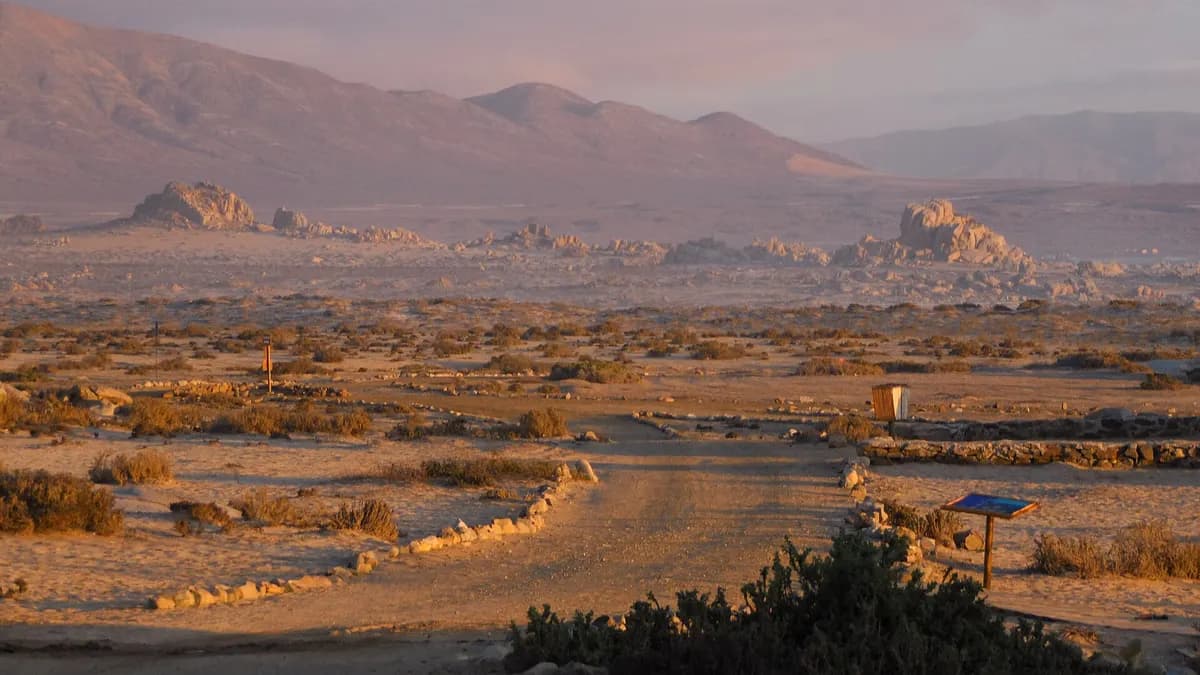
The flowering desert does not happen every year. Seeds and bulbs of hundreds of species wait under the sand until enough rain, more frequent in years influenced by El Niño, activates them. When that happens, Atacama's coastal desert is covered in color between late winter and spring. In September Sernatur said the region was preparing for a historic season.
| Flower | Color | When it appears |
|---|---|---|
| Añañuca | Red, yellow or pink | Among the first, from late August |
| Huilli | White | Among the first, from late August |
| Pata de guanaco | Fuchsia | Forms the large carpets of color |
| Garra de león | Red | Until the second half of November; emblematic species |
The phenomenon also has a clear economic effect in the region: it fills hotels, cabins and restaurants at a time that is not normally high season, and extends work for local guides and operators. That is why Sernatur promoted it in the Santiago Metropolitan Region, in Coquimbo with tour operators, in Catamarca and at the FIT fair in Buenos Aires, and is planning six to eight more actions.
The garra de león, which only grows in this part of Atacama, is the flower photographers seek most and one of the reasons for special care in Llanos de Challe National Park.
How to plan the trip
| Starting point | Approximate distance to Copiapó | How to get there |
|---|---|---|
| Santiago | about 800 km | Flight to Desierto de Atacama airport or bus on Route 5 |
| La Serena | about 330 km | Route 5 North, about 4 hours by car |
| Antofagasta | about 560 km | Route 5 North or a connecting flight |
Distances are approximate by road. Many travelers combine the bloom with the coast at Bahía Inglesa and Caldera, or with Pan de Azúcar National Park. If you drive from Santiago, our guide to Route 5 North helps plan the stops, and if you pass through La Serena, see things to do in La Serena and Coquimbo.
Bring water, sunscreen and warm clothes: in the coastal desert mornings are often foggy and nights are cold. The best photos come early or late in the afternoon, when the light is softer. On October weekends, lodging in Copiapó, Caldera and Vallenar fills up, so book ahead.
Frequently asked questions
How long does the 2026 flowering desert last?
The peak was projected for mid-October. Some species, like the garra de león, can keep blooming until the second half of November.
Where is the best place to see the flowering desert?
Pampa Caracoles, Desierto Florido National Park, Route 5 near Pajaritos, Quebrada Totoral, Llanos de Challe National Park and the Freirina coastline.
Can you walk into the flower fields?
Not with vehicles or pets, and picking flowers is not allowed. Authorities ask visitors to look from roads and marked trails.