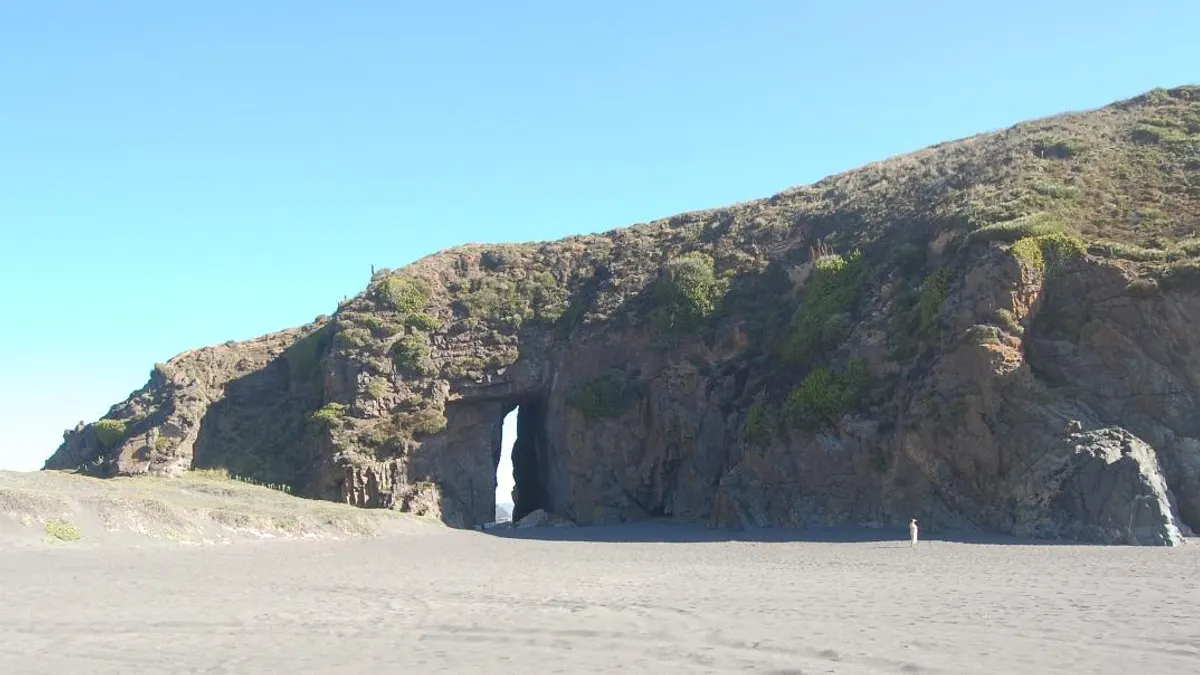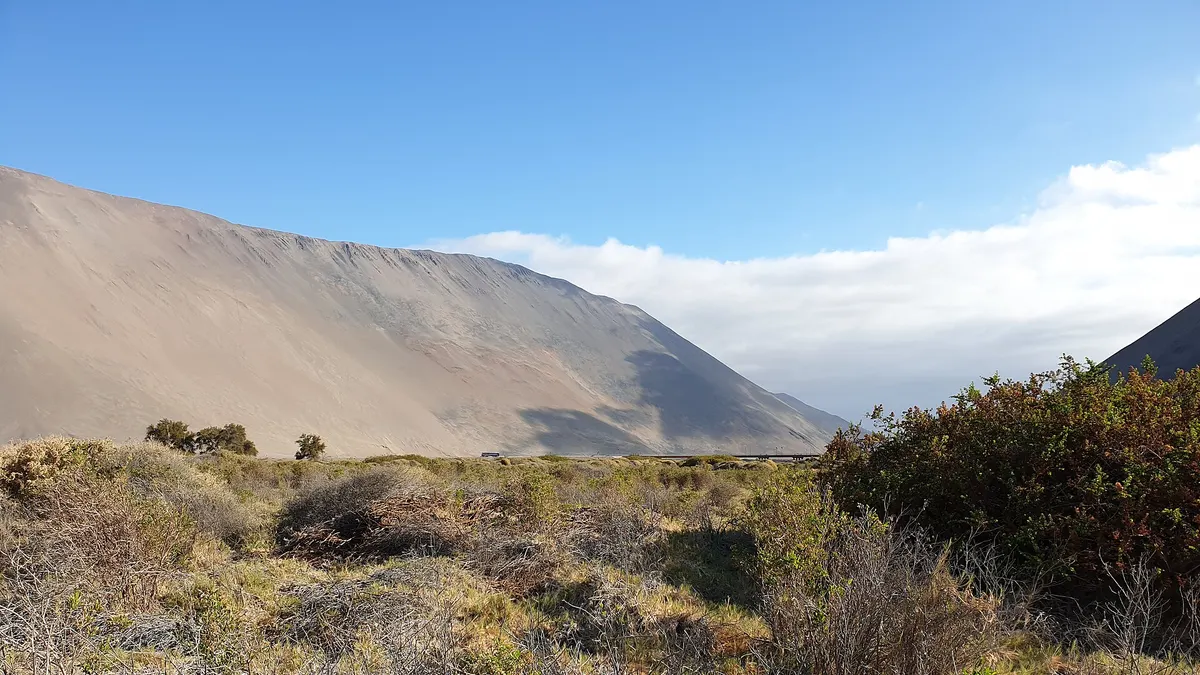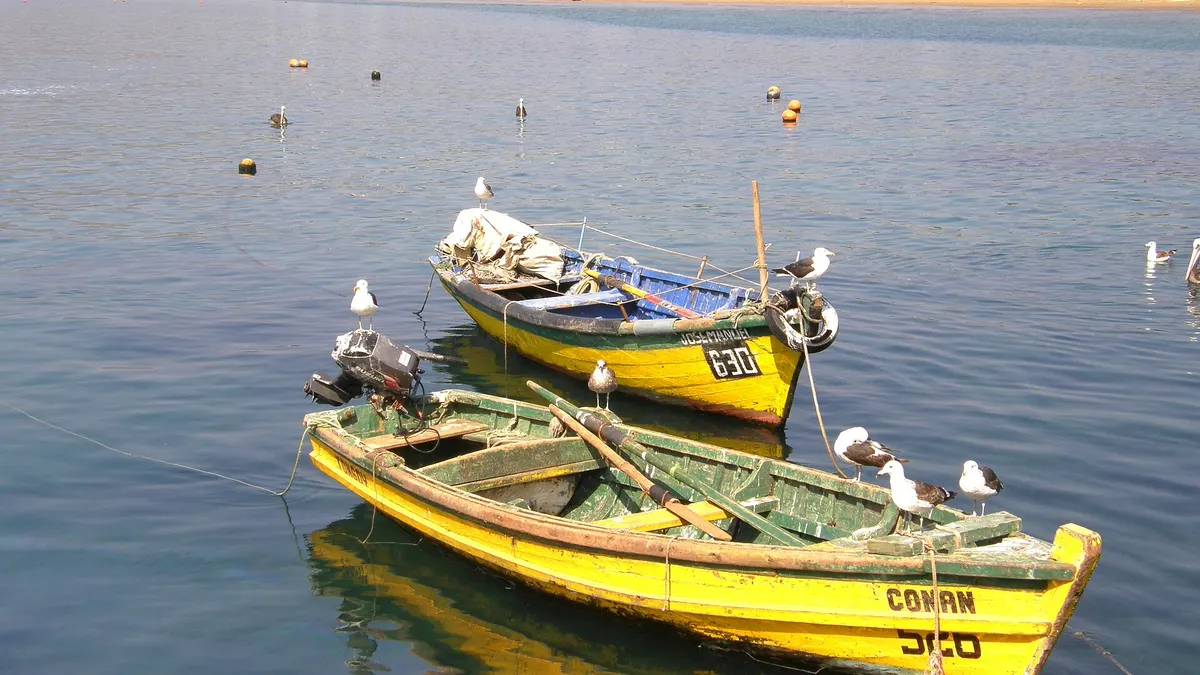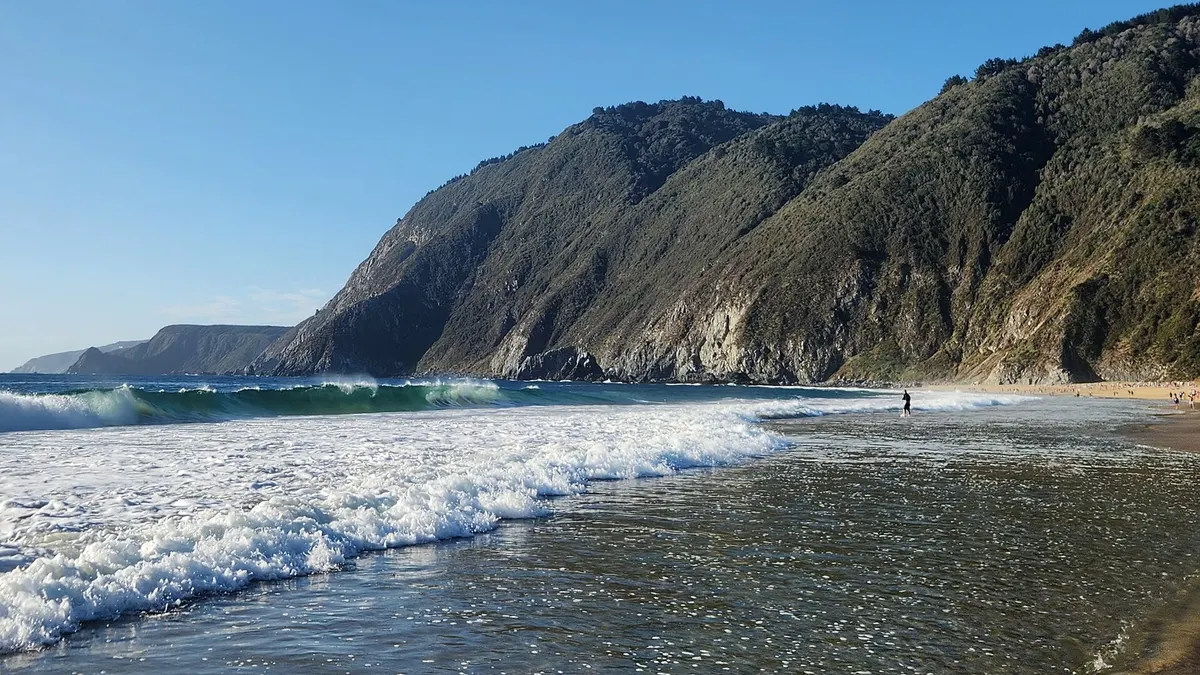
Quintay is a fishing cove in the municipality of Casablanca, in Chile's Valparaíso Region, 121 km from Santiago and 44 km south of Valparaíso. It combines a white-sand beach, a small beach between rocks and the largest whaling station that ever operated in Chile, now a museum. The distances are those given by Fundación Quintay, which runs the museum.
This guide covers Quintay's beaches, the history of the whaling station, things to do, the weather and how to get there, with data checked on 9 November 2026. Opening hours, prices and beaches cleared for swimming change from one season to the next: check them before you travel.
View the data as a table
| km from Santiago | 121 |
| whales processed per year at the peak (1956-1962) | 2,100 |
| years the whaling station operated | 24 |
| m² of esplanades at the former whaling station | 9,500 |
Quintay beaches
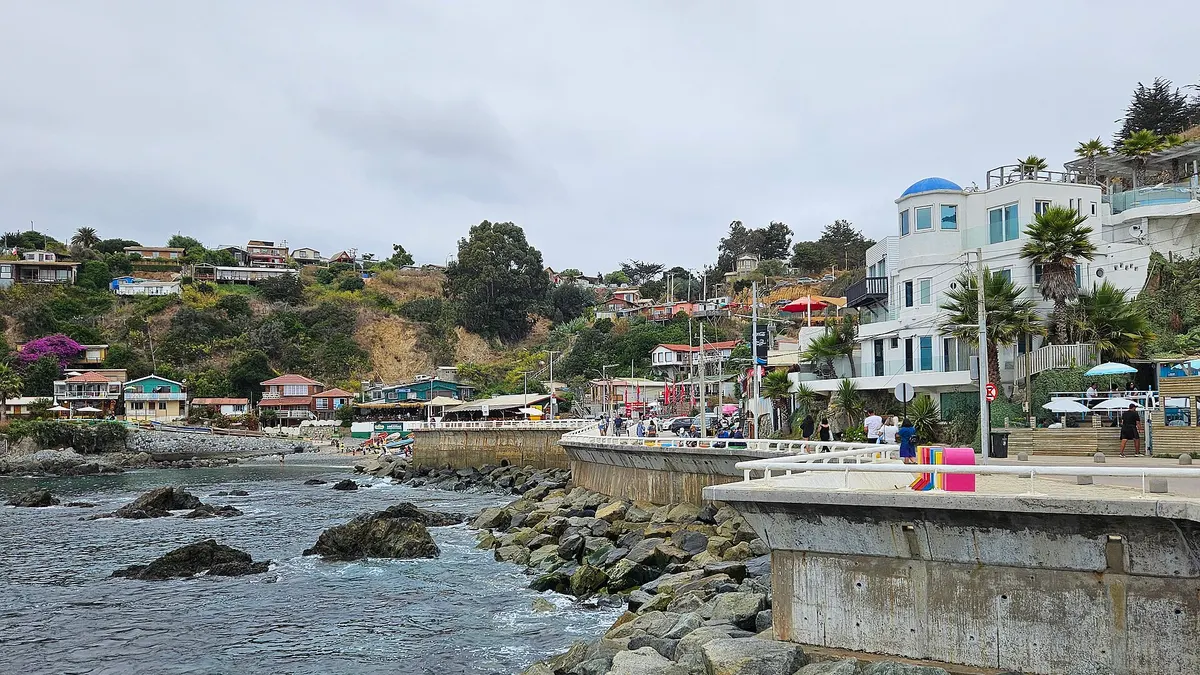
The village is made up of several areas: La Caleta, El Pueblo, Playa Grande, Playa Chica, Playa Brava and the Santa Augusta de Quintay housing estate, according to Wikipedia. The surrounding hills shelter it from southerly winds, which is why the cove stays mild even in winter, as Fundación Quintay points out.
| Beach | Where | What it's like |
|---|---|---|
| Playa Grande | North side, below Curauma hill | White sand, about 800 m to 1 km long, backed by pines and peumo trees; the busiest beach |
| Playa Chica | South coast of the cove | Small and steep, between rocks; its reefs are an advanced dive site |
| Playa Brava | Area of the same name | Exposed to the swell, better for walking than swimming |
| La Caleta | Next to the old whaling station | Boats, seafood restaurants and the dive centres |
| Tunquén (nearby) | To the south, between Casablanca and Algarrobo | A 5 km undeveloped beach with a wetland at the mouth of the Casablanca creek |
Sources: Fundación Quintay (800 m for Playa Grande), Wikipedia (areas, 1 km of beach and Playa Chica reefs) and Wikipedia (Tunquén). Before swimming, check whether the beach has lifeguards in the Chilean Navy's Playas Chile app: the official beach season runs from 15 December to 15 March and the list changes every summer.
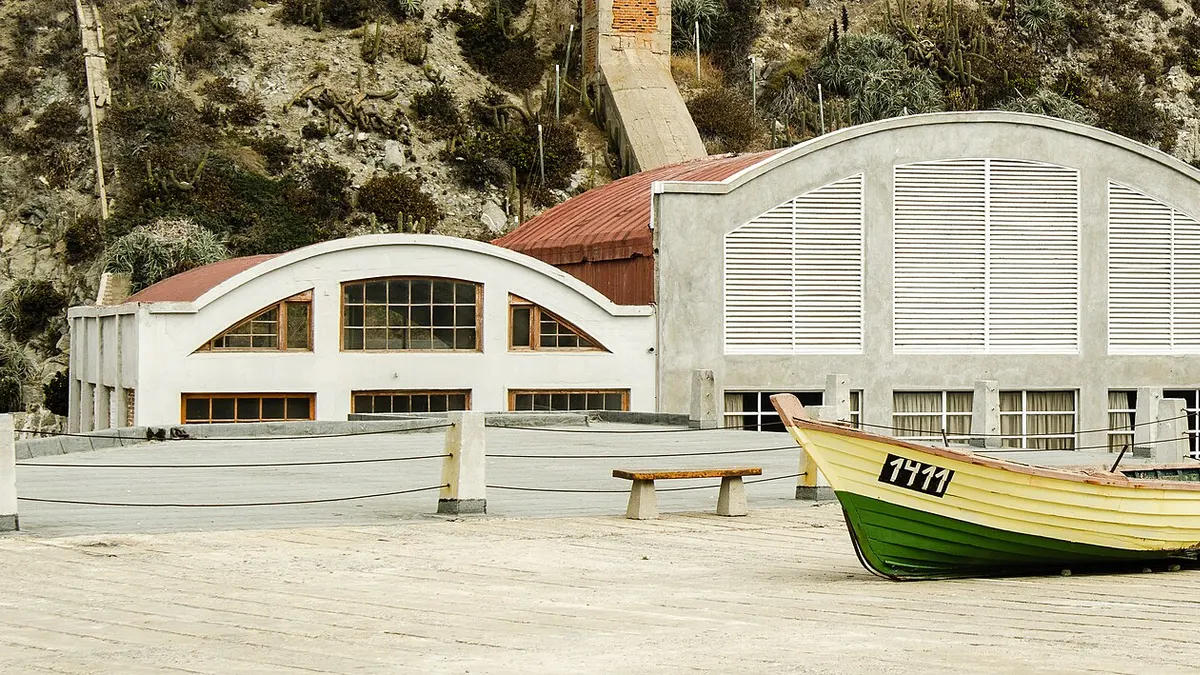
The Quintay whaling station, Chile's largest
The plant was opened on 1 December 1943 by Compañía Industrial (INDUS) on reclaimed land between the islets of the bay, and it was the largest in the country. At its peak, between 1956 and 1962, it processed 2,100 whales and produced 43,826 barrels of oil a year, with 700 to 1,000 workers and up to eight boats hunting at the same time, according to Wikipedia. The last season, from January to March 1967 and already under Japanese management, caught 486 whales, and the plant closed because it was no longer profitable.
- 1900The cove is foundedFishermen arrive from Algarrobo, El Quisco and Valparaíso.
- 1943The whaling station opensCompañía Industrial (INDUS) opens it on 1 December.
- 1956-1962Peak yearsUp to 2,100 whales and 43,826 barrels of oil a year.
- 1964Japanese managementReopens to produce meat for Japan.
- 1967Last season486 whales between January and March; then the plant closes.
- 1993-1999Science and museumUniversidad Andrés Bello sets up its marine research centre and Fundación Quintay the museum.
- 2015Historic monumentDecree 321 of 10 August.
| Fact | Figure |
|---|---|
| Years in operation | 1943-1967 |
| Whales processed per year at the peak (1956-1962) | 2,100 |
| Barrels of oil per year at the peak | 43,826 |
| Whales in the last season (1967) | 486 |
| Area of the museum esplanades | About 9,500 m² |
| Declared a historic monument | Decree 321, 10 August 2015 |
Sources: Wikipedia, Wikipedia and Fundación Quintay. Whaling has been banned in Chile since 15 July 1983, and since 2008 the country's whole exclusive economic zone has been a whale-hunting-free zone (Wikipedia). The museum has five rooms on the history of the plant and the life of whales, and the esplanades over the sea are the best viewpoint in the bay. There is an entrance fee: check the price and opening hours with the foundation before you go.
Things to do in Quintay
- Walk around the old whaling station and its esplanades, overlooking the bay and the cove.
- Eat at the cove, where fishermen run seafood and fish restaurants facing the sea.
- Dive among wrecks: Quintay has three dive centres and sites such as La Caldera, the remains of the whaler Indus IV at 8 m, suitable for beginners.
- See sea lions at the Punta Curaumilla colony to the north, the largest on the central coast with more than 700 animals; it can only be reached by boat, in about 30 minutes.
- Walk to Tunquén or towards Las Docas, neighbouring beaches on the same coast.
Source: Wikipedia. If you come from Santiago on Route 68 you pass through the Casablanca Valley, to which Quintay belongs, with wineries open to visitors: see our Chile wine route or compare excursions in Santiago wine tours to Casablanca and Maipo.
| La Caldera | Remains of the whaler Indus IV | 8 | Beginners |
| El Falucho | 25 m wreck from the Indus fleet | 15 | All |
| Los Jardines | Whaling harpoons and anchors | 15-30 | All |
| Playa Chica reefs | Fishermen's managed area | 20-30 | Advanced |
| El Fraile | Large rock with columns and caves; boat only | 25-50 | Advanced |
Quintay weather and when to go
Quintay has no weather station with public online data; the nearest coastal reference is the Chilean Meteorological Office station at Torquemada airfield, in Viña del Mar. Between 2016 and 2025 the mean January temperature there was 17.1 °C, against 22.0 °C in Santiago: the coast is about 5 °C cooler in summer and milder in winter.
View the data as a table
| Viña del Mar (coast, reference for Quintay) | Santiago (Quinta Normal) | |
|---|---|---|
| Jan | 17.1 °C | 22.0 °C |
| Feb | 16.9 °C | 21.7 °C |
| Mar | 15.8 °C | 19.5 °C |
| Apr | 13.9 °C | 15.5 °C |
| May | 12.6 °C | 11.8 °C |
| Jun | 11.0 °C | 9.0 °C |
| Jul | 10.4 °C | 8.8 °C |
| Aug | 11.1 °C | 10.4 °C |
| Sep | 11.9 °C | 12.8 °C |
| Oct | 13.0 °C | 15.5 °C |
| Nov | 14.9 °C | 18.6 °C |
| Dec | 16.1 °C | 20.8 °C |
| Period | What Quintay is like |
|---|---|
| Mid-December to mid-March | Beach season; busier at weekends and in January and February |
| March and April | Fewer visitors and still mild days |
| May to September | Rain and rougher seas; a good time for the museum and the cove |
| October and November | Quiet spring; the water is still cold |
Compiled by Viajando Chile with data from the DMC and the Navy's beach season. This summer is expected to be warmer than normal because of El Niño: see what to expect from summer 2026-2027.
How to get to Quintay from Santiago and Valparaíso
| From | How | Details |
|---|---|---|
| Santiago | Car | 121 km on Route 68 and the turn-off to Quintay; there is no direct bus |
| Santiago | Bus to Casablanca | From CLP 1,900, departures between 05:50 and 22:20 (Turbus and Paravías) |
| Santiago | Bus to Valparaíso | 116 km, from CLP 3,610 |
| Valparaíso | Local bus or shared taxi | 44 km; check the route and frequency at the terminal before you travel |
Sources: Fundación Quintay (distances) and Kupos for buses to Casablanca and Valparaíso, checked on 9 November 2026; fares rise in summer and at weekends. Quintay can be combined in a day with Valparaíso or, further south, with Algarrobo and Isla Negra.
Frequently asked questions
Where is Quintay?
On the coast of the Casablanca municipality, Valparaíso Region, 121 km from Santiago and 44 km south of Valparaíso.
Which beach in Quintay is best?
For a day at the beach, Playa Grande, with white sand and sheltered by Curauma hill. Playa Chica is smaller and rocky, and better known for diving.
Can you visit the Quintay whaling station?
Yes. Fundación Quintay opens it as a site museum, with five rooms and esplanades over the sea, for a general admission fee.
Is there a direct bus from Santiago to Quintay?
We found no direct Santiago-Quintay tickets on Kupos on 9 November 2026. Most visitors drive or take a bus to Valparaíso or Casablanca and continue by local transport.