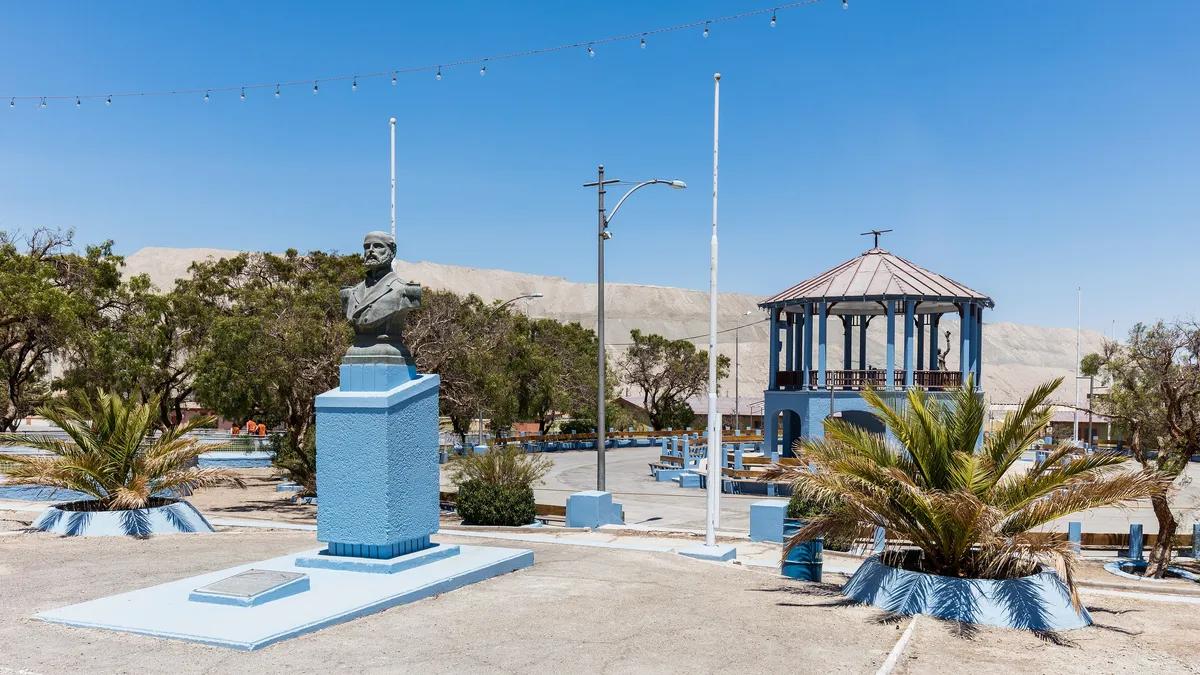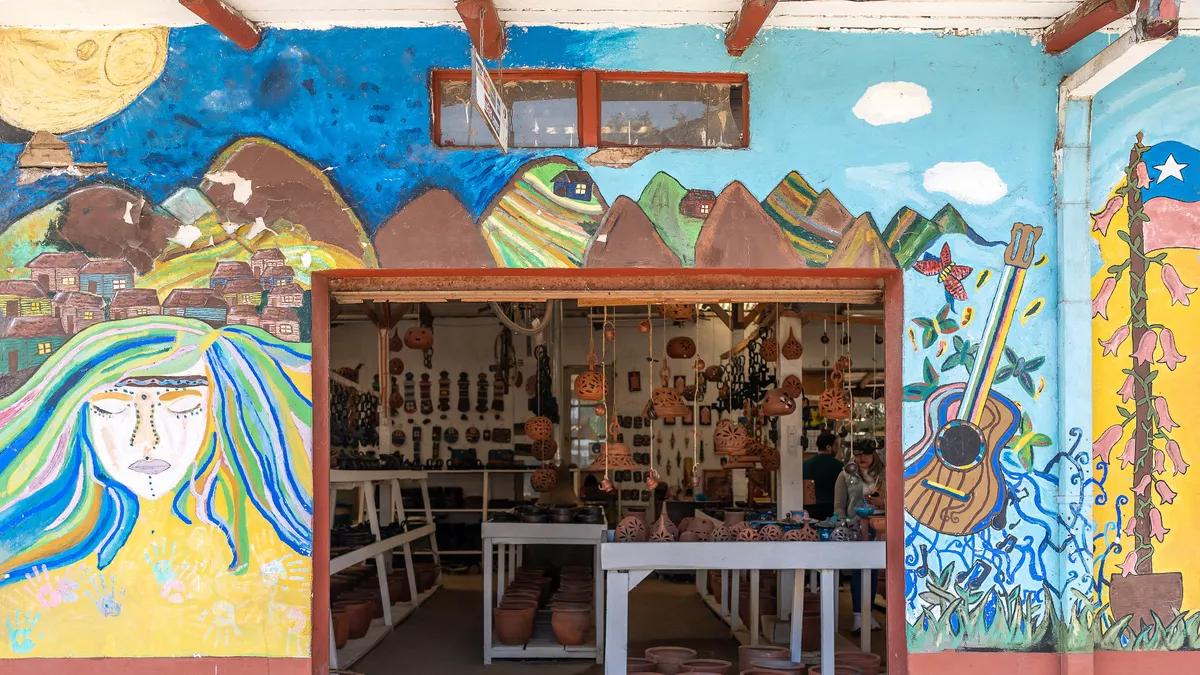
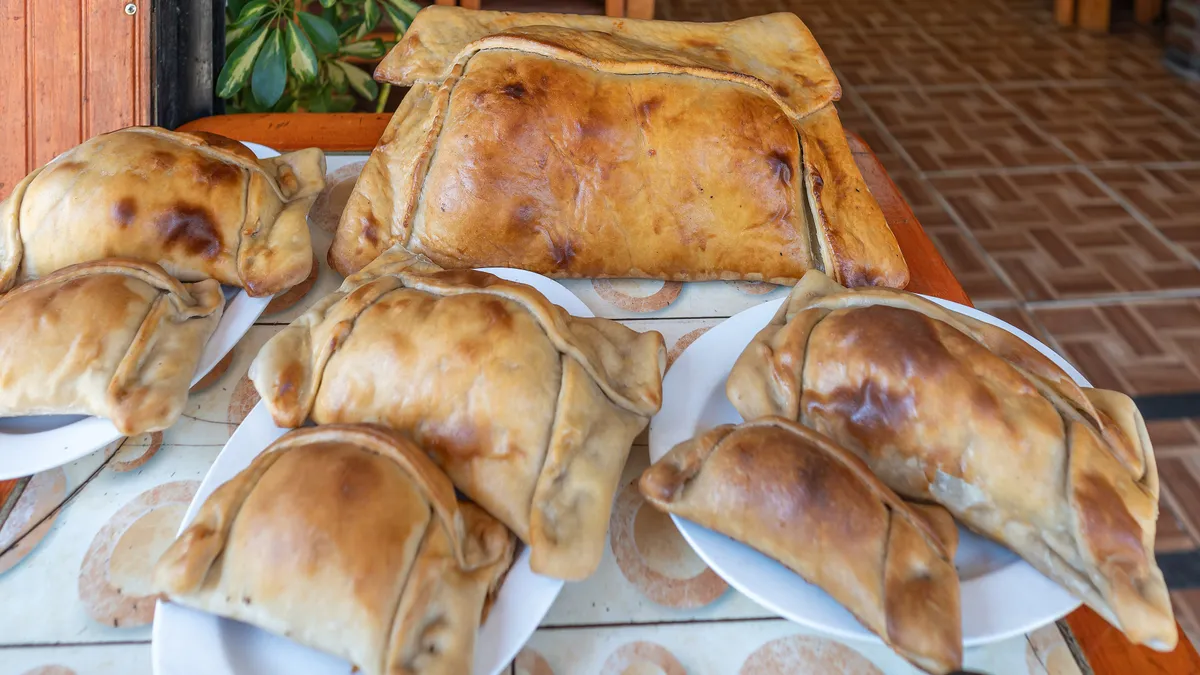
Pomaire is a village of potters in the Melipilla municipality, 50 kilometres west of Santiago, famous for its reddish clay, its lucky clay pigs and its giant empanadas. It had 3,921 residents in the 2017 Census and its pottery tradition predates the arrival of the Spanish, according to Wikipedia. It is one of the easiest day trips from the capital: about an hour along the Autopista del Sol.
View the data as a table
| Km west of Santiago | 50 |
| Residents (2017 Census) | 3,921 |
| Women potters around 1950 | 95% |
| Kilos of the giant clay pig (2012) | 550 |
What to do in Pomaire
- Walk along Roberto Bravo street, the village's main street, with clay workshops and shops and most of the restaurants.
- Buy clay straight from the maker: bowls, pots, planters and serving dishes. Most of the village's trade is run by the makers themselves, according to Wikipedia.
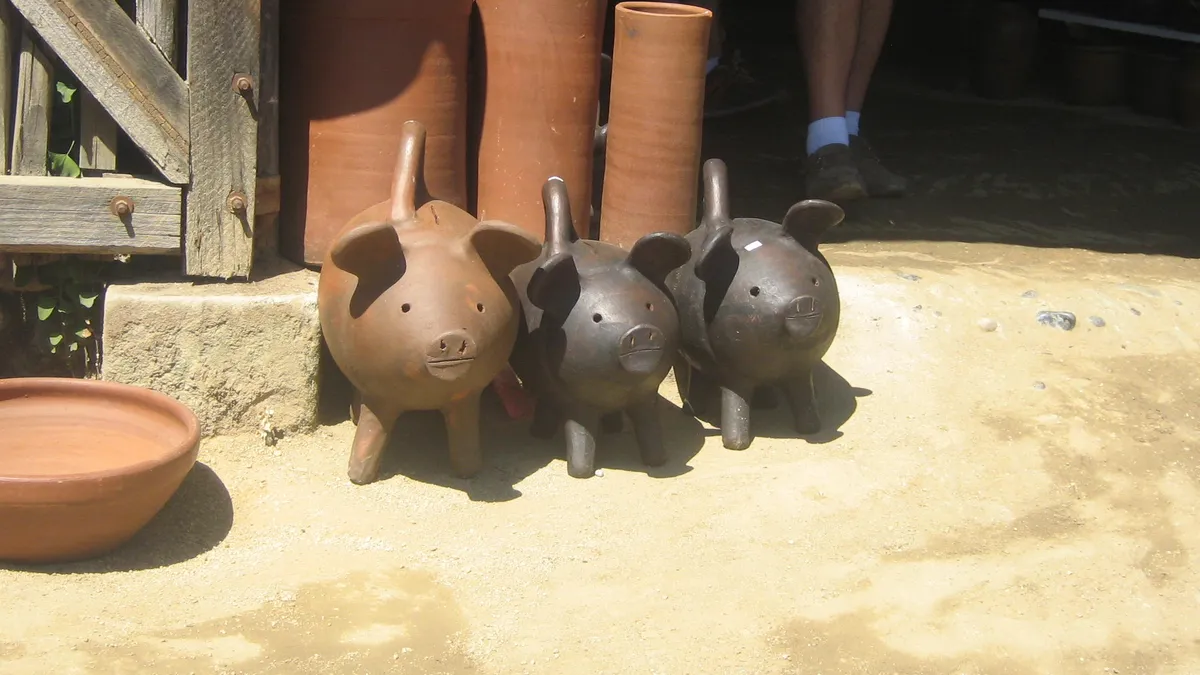
- Look for the three-legged clay pigs, piggy banks that tradition says bring good luck.
- Watch a potter at the wheel in the workshops open to the public.
- Eat Chilean food: beef empanada, pastel de choclo (corn pie) in a clay dish and cazuela stew.
- See the giant clay pig, 3 metres long and 550 kilos, made by artisan César Silva Rojo in 2012 and displayed at his workshop.
Pomaire clay: how it is made
Pomaire pottery has a reddish tone and a smooth, shiny surface. Black clay is dyed with smoke and fired in mud ovens at 600 to 800 degrees, which removes any smell or taste. Glazed pieces are also made today. Around 1950, 95% of the village's women worked as potters, which made them independent businesswomen, says Wikipedia.
The village has plenty of history: intendant Benjamín Vicuña Mackenna visited in 1874 and promoted its first school; Pablo Neruda found refuge there, and potters such as Rosa Astorga, Julita Vera and Olga Salinas, a friend of Gabriela Mistral, became known beyond Chile. It is all told in the book *Historia de Pomaire* (2012) by journalist Hernán Bustos Valdivia, cited by Wikipedia.
- 1482Inca and Diaguita groups settle in the valley
- 1583The village moves to its current site, surrounded by clay hills
- 1742-1745Tomás Pomaire governs the village and gives it his name
- 1853Pottery caravans travel to Valparaíso and Lo Vásquez
- 195095% of the village's women work with clay
- 2012An artisan makes a 3-metre, 550-kilo clay pig
- 6 Oct 2026A fire destroys three homes and three shops in the centreAmong them, the San Pedro restaurant.
| Piece | What it is used for |
|---|---|
| Bowl or serving dish | Pastel de choclo and other baked dishes |
| Clay pot | Cazuelas and stews |
| Pig piggy bank | Saving and, by tradition, good luck (the three-legged ones) |
| Vessels and ornaments | Decoration |
Where to eat in Pomaire
Pomaire has dozens of Chilean restaurants, almost all on Roberto Bravo, San Antonio and Roto Chileno streets. These are the most reviewed on Google Maps as of 14 November 2026; La Normita (4.9) and El Boliche (4.6) have the best ratings, with fewer reviews.
| Pomaire Gredas | 4.5 | 4,782 |
| Restaurant San Antonio Casa de Campo | 4.5 | 4,003 |
| Restaurant La Chingana de Pomaire | 4.3 | 1,691 |
| El Parrón de Pomaire | 4.1 | 1,423 |
| Restaurante La Fuente de mi Tierra | 4.5 | 1,231 |
| Restaurant San Antonio Casa Colonial | 4.5 | 1,231 |
| Restaurante La Greda | 4.0 | 1,215 |
| Restaurant Los Naranjos | 3.7 | 1,097 |
| Restaurant Los Secretos de Anita | 4.5 | 926 |
| Restaurant El Cototudo | 4.1 | 849 |
| El Boliche de Pomaire | 4.6 | 731 |
| La Normita Tenedor Libre | 4.9 | 105 |
To give an idea of prices, the menu published by Restaurant San Antonio, which is celebrating 56 years, charges CLP 4,490 for a 150-gram baked beef empanada, 10,900 for the 800-gram giant empanada and 12,990 for pastel de choclo in a clay dish (checked on 14 November 2026).
Note: in the early hours of 6 October 2026 a fire destroyed three homes and three businesses in central Pomaire, including the San Pedro restaurant, BioBioChile reported. The rest of the village is operating normally.
How to get to Pomaire from Santiago
| Mode | Route | Time and cost |
|---|---|---|
| Car | Autopista del Sol (Route 78) towards Melipilla and turn-off to Pomaire | About 1 hour; 50 km according to Wikipedia (plus the motorway toll) |
| Bus + rural minibus | Bus from Terminal San Borja to Melipilla, then a rural minibus to Pomaire (Kupos) | Santiago-Melipilla from CLP 2,000 to 3,000 (Kupos, 14 November 2026) |
Pomaire pairs well with the wineries near Santiago or, following Route 78 to the coast, with Neruda's house at Isla Negra.
Pomaire in one day: suggested itinerary
- 10:00 Leave Santiago on the Autopista del Sol; you will be in the village in an hour.
- 11:00 Stroll Roberto Bravo street and its workshops, with time to watch a wheel and choose pieces.
- 13:00 Lunch of Chilean food: empanada, pastel de choclo or cazuela. Arrive before 13:30 at weekends.
- 15:00 Buy large clay pieces (pots, planters) last, so you do not carry them all day.
- 16:30 Return to Santiago or detour to a valley winery or towards the coast on the same Route 78.
When to go to Pomaire
- Weekends: the village is livelier, but there are more people and queues at restaurants at lunchtime.
- Weekdays: quieter for visiting workshops and talking to the artisans.
- Summer: strong midday heat; it is best to arrive in the morning.
Frequently asked questions
Where is Pomaire?
In the Melipilla municipality, Metropolitan Region, 50 km west of Santiago along the Autopista del Sol.
How much is an empanada in Pomaire?
It depends on the place. As a reference, on Restaurant San Antonio's menu the 150 g beef empanada costs CLP 4,490 and the 800 g giant one CLP 10,900 (November 2026).
What does the three-legged pig mean?
It is a clay piggy bank. According to the popular belief cited by Wikipedia, the three-legged ones bring good luck, which is why they are the village's best-selling souvenir.
Can you get to Pomaire by public transport?
Yes: bus from Terminal San Borja to Melipilla and from there a rural minibus to Pomaire. There is no direct bus with online sales.