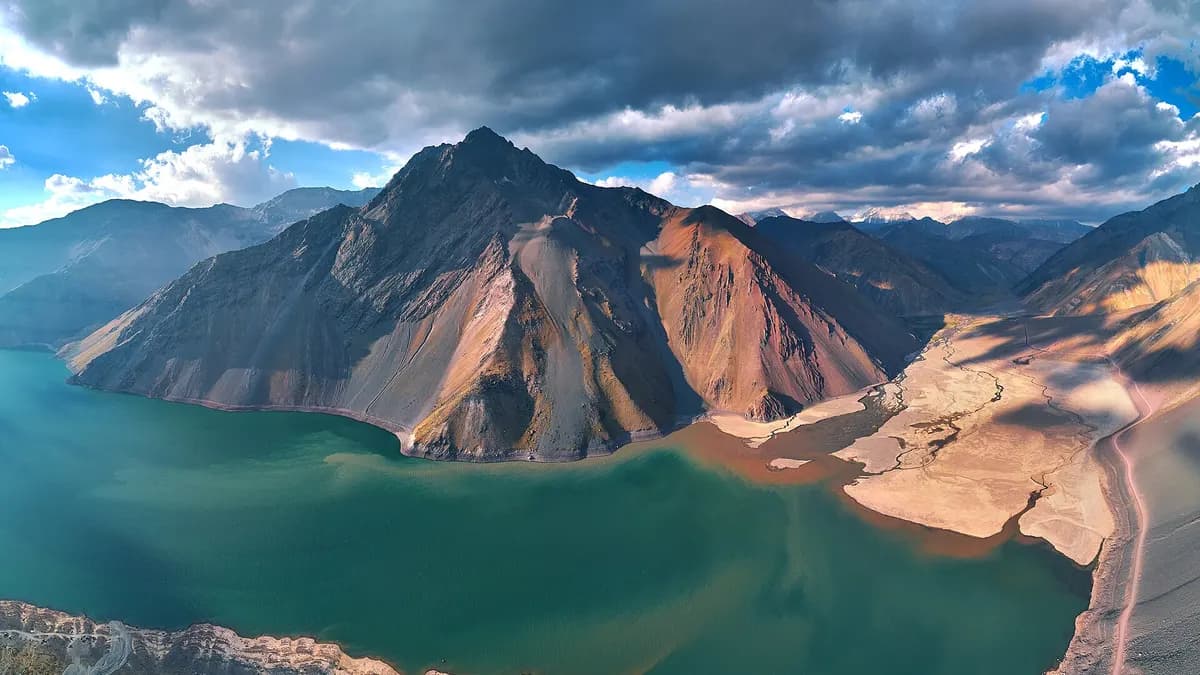
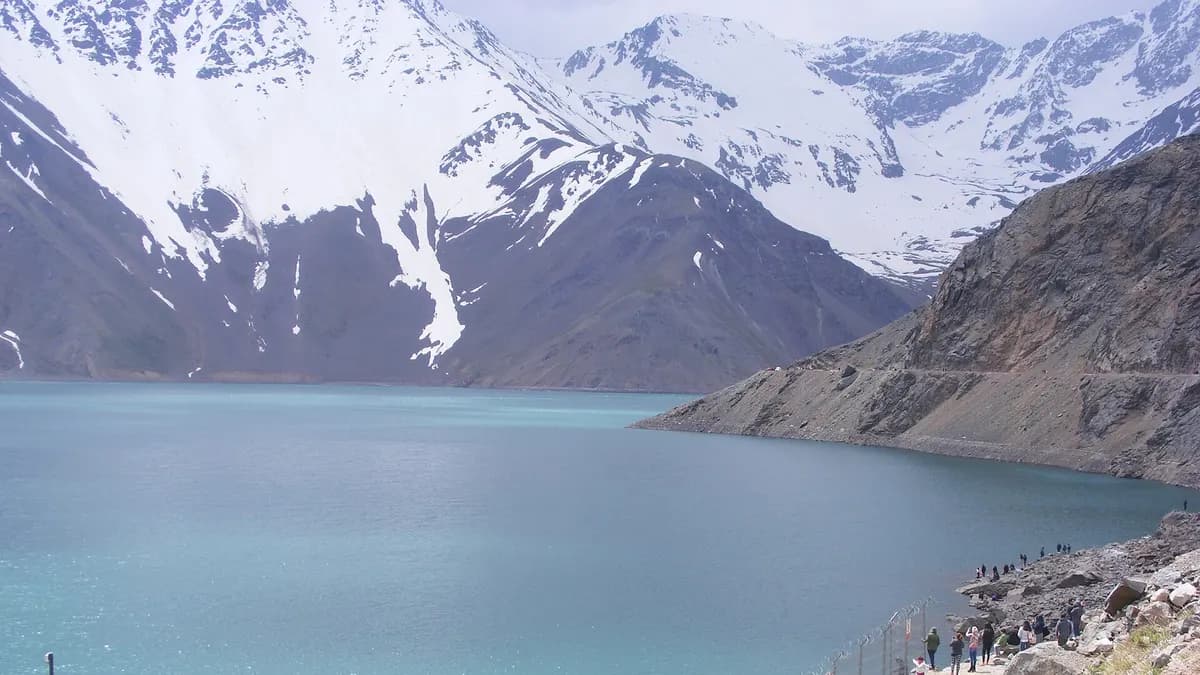
Embalse El Yeso is the most visited turquoise lake in the Cajón del Maipo, in the municipality of San José de Maipo, and the main drinking-water reserve for Santiago. You can only get there by car or on a tour, along Route G-25 and then G-455, a mountain road that the Cordillera Provincial Presidential Delegation closes to vehicles from April to August. Outside that period, access is also cut when there is rain or snow, as happened on 21 October 2026 with the latest weather front.
*Updated on 26 October 2026.* The prices, opening hours and restrictions in this guide come from the Asociación Parque Cordillera, which runs the Embalse El Yeso Natural Park, and from the Cordillera Provincial Presidential Delegation. They change with the weather: check them on the day of your trip.
Embalse El Yeso at a glance
| Fact | Detail | Source |
|---|---|---|
| Location | Municipality of San José de Maipo, Santiago Metropolitan Region, high Andes of the Cajón del Maipo | Cordillera Provincial Presidential Delegation |
| Opened | 1964, after about ten years of works | La Tercera |
| Capacity | 256 million m³ according to the DGA bulletin (other sources cite 220 million) | Chilevisión, with DGA data |
| Level in early 2026 | 92% of capacity in January | Reporte Agrícola (23 January 2026) |
| Approximate altitude | About 2,500 metres above sea level at the dam wall | Local guides; no official figure published on the sites consulted |
| Park management | Asociación Parque Cordillera (seven municipalities, including San José de Maipo) | Asociación Parque Cordillera |
The reservoir was built in the 1950s and opened in 1964, according to La Tercera. Today it is operated by Aguas Andinas and is the reserve that secures the capital's drinking water in dry summers. There are two figures for its capacity: Chilevisión cites 256 million cubic metres according to the hydrological bulletin of the General Water Directorate, while several press reports mention 220 million. After the rain and snow of 2025 and 2026, the reservoir started this year almost full.
When you can drive up to Embalse El Yeso: the winter closure
On 1 April 2026 the annual closure of vehicle access to the reservoir via Route G-455 came into force under Exempt Resolution No. 5615. The measure "prohibits the circulation of motor vehicles between April and August", the Cordillera Provincial Presidential Delegation explained, because of the unpaved stretches, the gradients, unstable ground, snow, ice and the risk of rockfall. Vialidad Cordillera, Carabineros (San Gabriel station), the Regional Transport Ministry office, Aguas Andinas and Etex Group took part in the operation.
| Period or situation | What happens to access | Who reports it |
|---|---|---|
| April to August | Motor vehicles banned on G-455 (barrier at km 21.7) | Cordillera Delegation; Asociación Parque Cordillera |
| Park's winter mode | Entry only with a certified guide or tour operator, via the Puente Caya sector towards Laguna del Encañado and Laguna Negra | Asociación Parque Cordillera |
| Rainy days or alerts | Preventive closures of G-455 and the San Gabriel sector (G-25), as on 21 October 2026 | Senapred, Delegation, San José de Maipo municipality |
| Spring and summer | Peak visiting season; there can still be closures due to snowmelt, rockfall or swollen streams | Cordillera Delegation |
As of 26 October 2026, the park's official page still showed the status "closed" and operation in "winter mode", with entry only through guides on the register of guides and tour operators. In addition, on 21 October access to the reservoir was closed as a precaution because of the weather front, as we reported in the mountain roads closed by the storm. Before setting off, check the social media accounts of the Cordillera Delegation and the San José de Maipo municipality.
How to get to Embalse El Yeso from Santiago
The usual route leaves Puente Alto along the road to El Volcán (G-25), passes through San José de Maipo and continues to the San Gabriel sector, where you turn off onto G-455, the road to El Yeso. Local guides estimate about 85 km and around two hours from Santiago, with a final gravel stretch that is narrow and winding. The Asociación Parque Cordillera states that you can get there by private car or with a tour operator: there is no regular public transport to the reservoir.
| How to get there | Advantages | Bear in mind |
|---|---|---|
| Private car | Freedom to set your own schedule and stops in the Cajón del Maipo | Gravel and steep gradients; respect the closures and any up/down times set by the authorities |
| Tour from Santiago | No mountain driving; mandatory in winter mode | Choose an operator on the Asociación Parque Cordillera register |
| Bus to San José de Maipo | Cheap way to reach the town | Does not continue to the reservoir; you need other transport from the town |
Fill up with fuel in San José de Maipo, download an offline map (there is no reliable signal up high) and bring water, warm layers and sunscreen: at that altitude the sun burns even when it is cold. Our guide to things to do in the Cajón del Maipo covers the stops along the way, such as the hot springs and villages on the route.
Do you run a tour, a mountain lodge or a restaurant in the Cajón del Maipo? Show your offer to travellers planning the drive up to Embalse El Yeso.
See advertising optionsWhat to do at Embalse El Yeso
The reservoir area is part of the Embalse El Yeso Natural Park, in the Asociación Parque Cordillera network of parks, which charges an entrance fee and sets opening hours and rules.
| Activity or fact | Official detail (October 2026) |
|---|---|
| Adult entrance | CLP 3,450 (includes service charge) |
| Seniors (60+) and children aged 2 to 14 | CLP 2,300 |
| Days and hours | Thursday to Monday, 8:00 to 18:00; last entry at 11:00 |
| Dam Wall trail (Sendero Cortina del Embalse) | About 3 km, low intensity, crosses the dam wall; last entry at 16:00 according to the same page |
| Laguna del Encañado and Laguna Negra winter route | Only with a certified guide or tour operator |
| Not allowed | Pets and drones |
| Payment | Online, through Tur.com |
Source: Asociación Parque Cordillera, accessed on 26 October 2026. The page gives two different last-entry times (11:00 for the park and 16:00 for the trail); confirm before you go. Besides hiking, the park mentions birdwatching, mountaineering and photography.
Safety: what to know before going up
- Rockfall and swollen streams: on 3 January 2026 a sediment slide on the road left about 40 people stranded, who were helped by emergency teams, according to Teletrece. In summer, snowmelt increases the flow of the streams that cross the road.
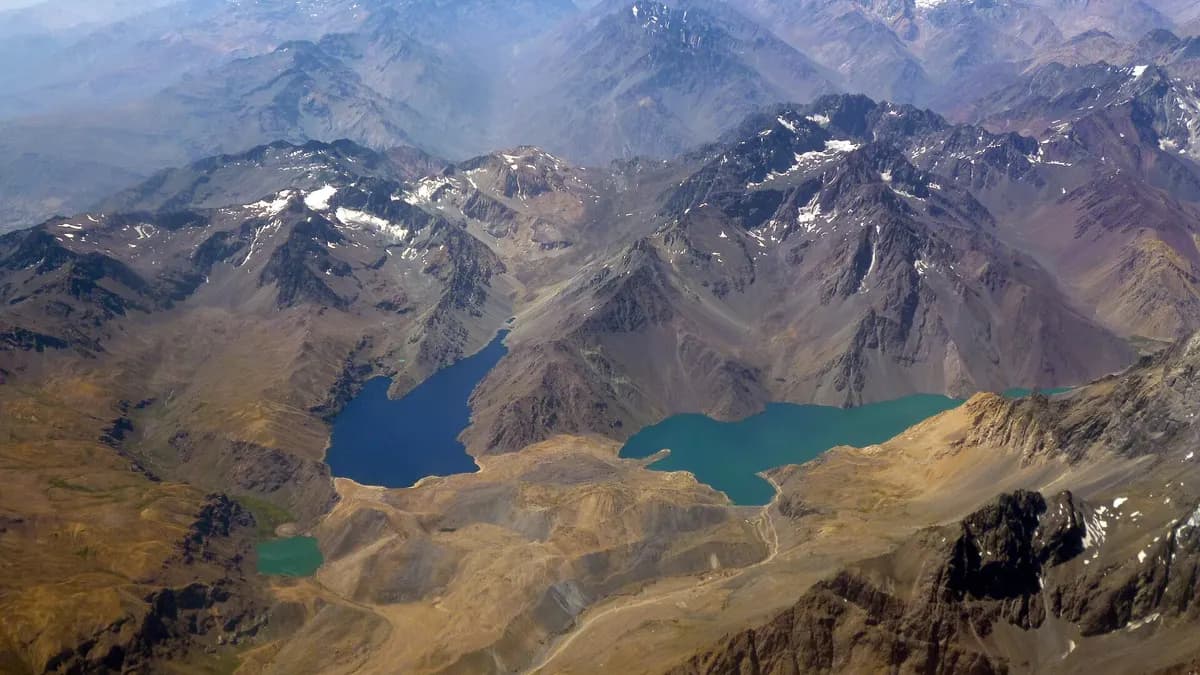
- Do not go down to the shore through unauthorised areas: the reservoir is a drinking-water reserve and its banks are unstable; stick to marked trails.
- Altitude and weather: conditions change quickly; bring a windproof layer and enough water (guides recommend at least 1.5 litres per person).
- Litter: there are no bins; take it back with you.
- Wildfire season: lighting fires is prohibited; check the rules in our story on the 2026-2027 wildfire season.
The best time to visit
The best time is from September to March, when the road is usually open to cars and the mountains still have snow in spring. On weekends and long holiday weekends there is heavy traffic in the Cajón del Maipo: set off early. For other day trips from the capital, see things to do in Santiago de Chile and the list of public holidays left in 2026.
Frequently asked questions
Is Embalse El Yeso open?
Vehicle access via G-455 is closed from April to August and on days of bad weather. As of 26 October 2026, the Embalse El Yeso Natural Park page was still in winter mode, with entry only with a certified guide. Check with the Cordillera Delegation before going up.
How much does it cost to enter Embalse El Yeso?
Park entry costs CLP 3,450 per adult and CLP 2,300 for seniors and children aged 2 to 14, according to the Asociación Parque Cordillera.
Can you get there by public transport?
There is no regular public transport to the reservoir. You get there by private car or on a tour.
How far is it from Santiago?
About 85 km, around two hours by car, according to local guides, with a final gravel stretch.