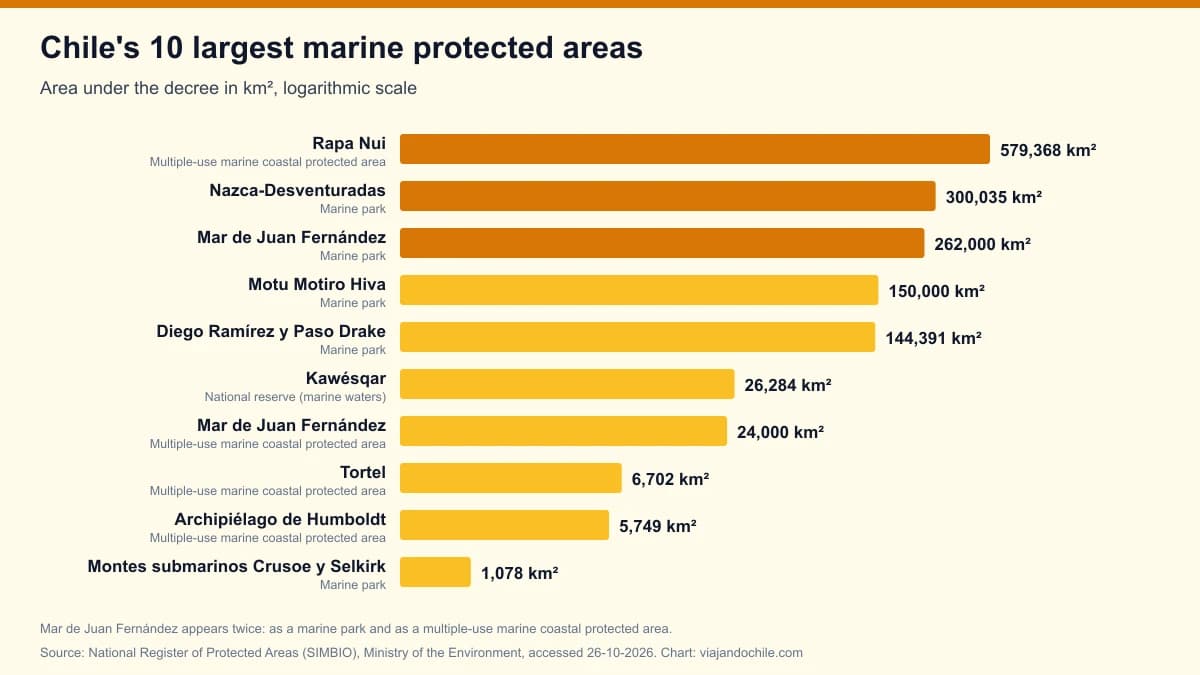
Chile's largest marine protected area is the Rapa Nui Multiple-Use Coastal Marine Protected Area, with 57,936,800 hectares (579,368 km²), according to the National Register of Protected Areas of the Ministry of the Environment. That is more than three-quarters of the area of mainland Chile in South America, of about 756,000 km². It is followed by the Nazca-Desventuradas Marine Park, at 300,035 km², and the Juan Fernández Sea Marine Park, at 262,000 km².
*Updated on 26 October 2026.* The ranking uses the decree area of each site published by the National Register of Protected Areas (SIMBIO) of the Ministry of the Environment, accessed through its official map service. It covers 33 marine areas: 11 marine parks, 15 multiple-use coastal marine protected areas, 6 marine reserves and the Kawésqar National Reserve, which protects marine waters only.
The 10 largest marine protected areas in Chile
| # | Protected area | Type | Area (km²) | Year created |
|---|---|---|---|---|
| 1 | Rapa Nui | Multiple-use coastal marine protected area | 579,368 | 2018 |
| 2 | Nazca-Desventuradas | Marine park | 300,035 | 2016 |
| 3 | Juan Fernández Sea | Marine park | 262,000 | 2018 |
| 4 | Motu Motiro Hiva | Marine park | 150,000 | 2010 |
| 5 | Diego Ramírez Islands and Drake Passage | Marine park | 144,391 | 2019 |
| 6 | Kawésqar | National reserve (marine waters) | 26,284 | 2019 |
| 7 | Juan Fernández Sea | Multiple-use coastal marine protected area | 24,000 | 2017 |
| 8 | Tortel | Multiple-use coastal marine protected area | 6,702 | 2018 |
| 9 | Humboldt Archipelago | Multiple-use coastal marine protected area | 5,749 | 2023 |
| 10 | Crusoe and Selkirk Seamounts | Marine park | 1,078 | 2017 |
Source: National Register of Protected Areas (SIMBIO), Ministry of the Environment, decree area in hectares converted to km² (1 km² = 100 ha), accessed on 26 October 2026. For Motu Motiro Hiva, the register also shows an "official IDE area" of 203,374 km², different from the decree figure; we use the decree area for all sites.
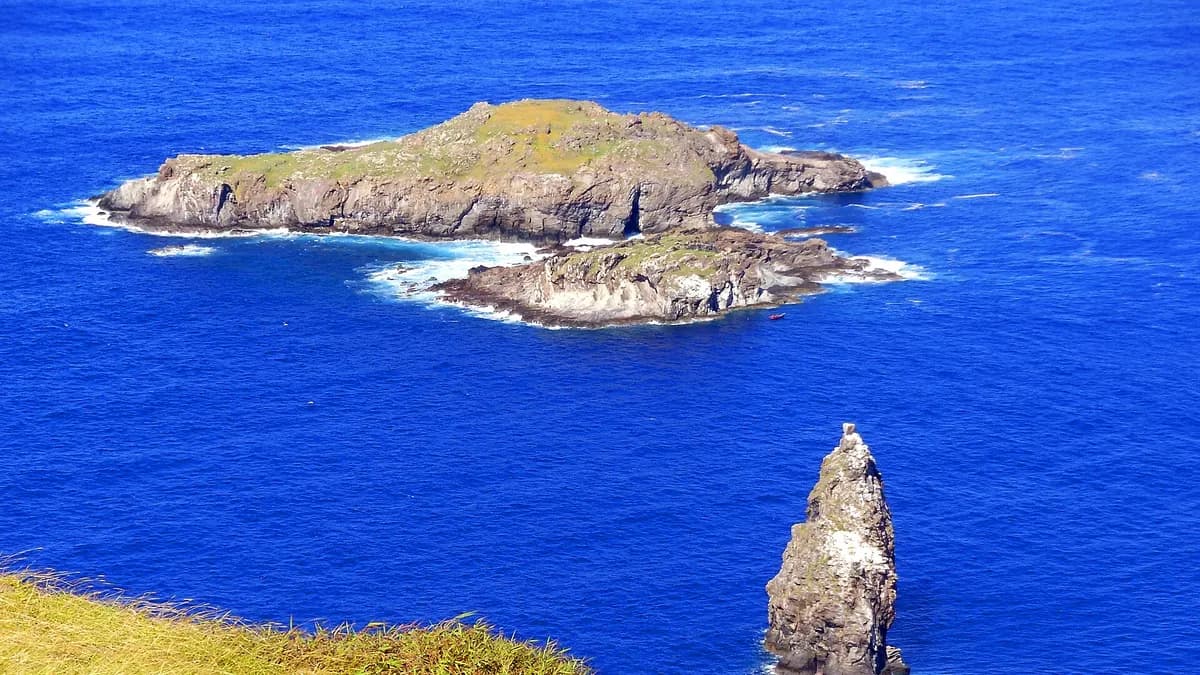
Rapa Nui, Chile's largest marine protected area
The Rapa Nui area is a multiple-use coastal marine protected area (AMCP-MU): it protects the ecosystem but allows traditional activities such as the community's artisanal fishing. According to the register, its administration is delegated to the Ministry of the Environment and a board. For visitors to the island, the sea is a central part of the trip, together with the moai and their meaning and the culture we describe in our guide to Rapa Nui.
Marine parks, by contrast, are the strictest category: extractive fishing is not allowed and only research, monitoring and, in some cases, regulated tourism are permitted. Three of the four largest marine parks are in the island Pacific: Nazca-Desventuradas, Juan Fernández Sea and Motu Motiro Hiva, around Salas y Gómez island. The fourth, Diego Ramírez Islands and Drake Passage, is in the far south, between Cape Horn and Antarctica.
| Type of marine area | Number | The largest |
|---|---|---|
| Marine park | 11 | Nazca-Desventuradas (300,035 km²) |
| Multiple-use coastal marine protected area | 15 | Rapa Nui (579,368 km²) |
| Marine reserve | 6 | Choros-Damas Islands (37.8 km²) |
| National reserve of marine waters | 1 | Kawésqar (26,284 km²) |
Source: National Register of Protected Areas (SIMBIO), Ministry of the Environment. In the official layer, marine parks appear under the designation "National Park"; we have separated them from land parks. We have not added up the areas, because some sites may overlap and the sum does not equal the net protected area.
Marine protected areas of mainland Chile
On the mainland, the largest is the Kawésqar National Reserve, in Magallanes, with 26,284 km² of channels and fjords. It was created in 2019 together with Kawésqar National Park on the former Alacalufes Forest Reserve, and according to its decree it covers only the maritime space that formed part of that reserve; details of its management are in our story on the first management council of Kawésqar National Park. Next come Tortel, in Aysén, and the Humboldt Archipelago, between the Atacama and Coquimbo regions, famous for the Humboldt penguin and bottlenose dolphins.
| # | Protected area | Type | Area (km²) | Year |
|---|---|---|---|---|
| 11 | Tictoc-Corcovado Gulf | Marine park | 1,019 | 2022 |
| 12 | Seno Almirantazgo | AMCP-MU | 764 | 2018 |
| 13 | Pisagua Sea | AMCP-MU | 735 | 2024 |
| 14 | Francisco Coloane | AMCP-MU | 672 | 2003 |
| 15 | Pitipalena-Añihue | AMCP-MU | 239 | 2014 |
| 16 | Lafken Mapu Lahual | AMCP-MU | 45 | 2005 |
| 17 | Punta Morro-Copiapó River Mouth-Isla Grande de Atacama | AMCP-MU | 40 | 2004 |
| 18 | Choros-Damas Islands | Marine reserve | 38 | 2005 |
| 19 | Chañaral Island | Marine reserve | 27 | 2005 |
| 20 | Francisco Coloane | Marine park | 15 | 2003 |
Source: National Register of Protected Areas (SIMBIO), Ministry of the Environment. AMCP-MU: multiple-use coastal marine protected area. The Choros-Damas Islands and Chañaral Island are part of the surroundings of the Humboldt Penguin National Reserve, a marine wildlife-watching destination near La Serena; we mention it in our guide to La Serena and Coquimbo.
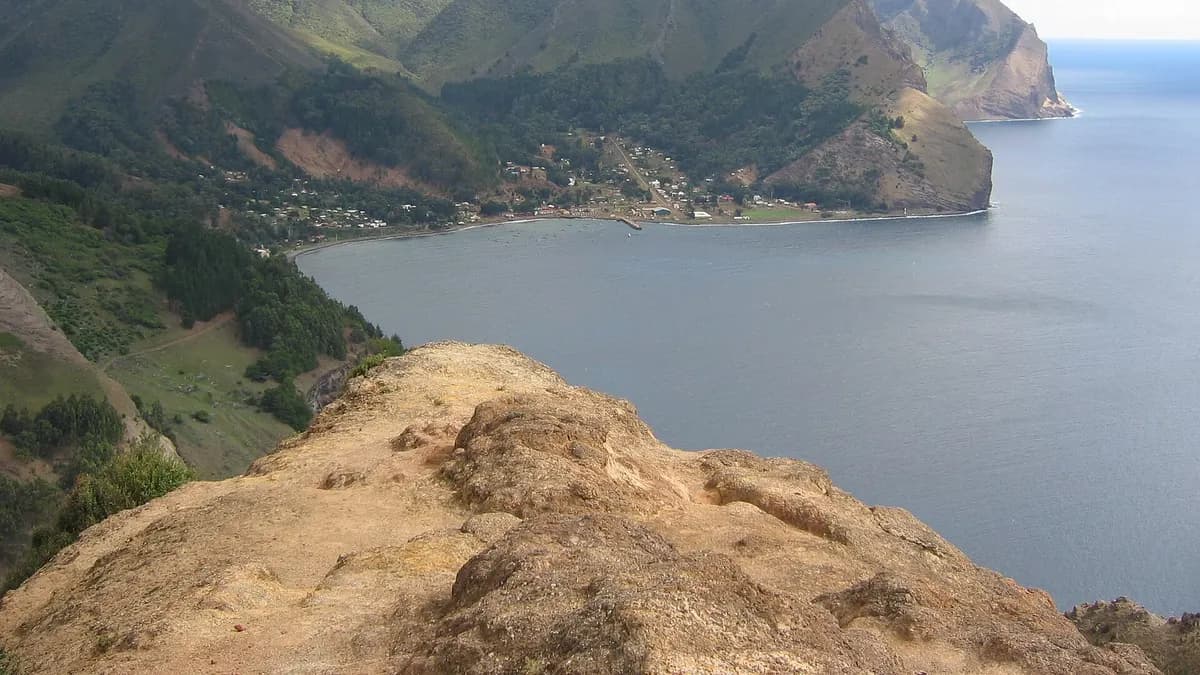
The pending Juan Fernández and Nazca-Desventuradas expansions
The ranking could change. On 10 March 2026 the decrees for two new marine parks, Juan Fernández Sea II (193,998 km²) and Nazca-Desventuradas II (143,323 km²), were signed and sent to the Comptroller General's Office. According to El Mostrador, the following government withdrew them from the Comptroller's Office and, as of 28 September 2026, they remained on hold. That is why they are not in this ranking: we only consider areas listed in the official register.
| Decree | Announced area | Status (28 Sep 2026) |
|---|---|---|
| Juan Fernández Sea II Marine Park | 193,998 km² | Withdrawn from the Comptroller's Office, not resubmitted |
| Nazca-Desventuradas II Marine Park | 143,323 km² | Withdrawn from the Comptroller's Office, not resubmitted |
Do you offer diving, marine wildlife watching or trips to the islands? Reach travellers planning their next adventure in Chile.
See advertising optionsHow this ranking was built
- A single source: all areas come from the Ministry of the Environment's National Register of Protected Areas (SIMBIO), using the area set by each site's decree.
- What counts as marine: marine parks, multiple-use coastal marine protected areas, marine reserves and the Kawésqar National Reserve. Land parks and reserves with a coastline, such as Pan de Azúcar National Park, are excluded.
- Areas with the same name: Juan Fernández Sea and Francisco Coloane appear twice because each has a separate marine park and multiple-use area.
- No percentage of the sea: we do not report what percentage of Chile's sea is protected because we did not find an official figure updated to 2026.
- More records: land areas are in our ranking of Chile's largest national parks.
How to cite this data
Viajando Chile (2026). *The largest marine protected areas in Chile in 2026: the official ranking by size*. With data from the National Register of Protected Areas, Ministry of the Environment. https://viajandochile.com/en/news/largest-marine-protected-areas-in-chile-ranking
Frequently asked questions
What is Chile's largest marine protected area?
The Rapa Nui Multiple-Use Coastal Marine Protected Area, at 579,368 km², according to the Ministry of the Environment.
What is Chile's largest marine park?
The Nazca-Desventuradas Marine Park, created in 2016, at 300,035 km².
How many marine protected areas does Chile have?
The official register lists 33 marine areas: 11 marine parks, 15 multiple-use coastal marine protected areas, 6 marine reserves and the Kawésqar National Reserve.
Can you visit a marine park?
Marine parks are the most restrictive category and most are far offshore. Multiple-use areas and marine reserves close to the coast, such as the Choros-Damas Islands, do receive visitors on authorised boats.