Chile's ministries of Science, Culture and National Assets have formed a working group to support the construction of the country's first Paleontological Museum and Park, in Bahía Inglesa, in the municipality of Caldera (Atacama Region). The project, led by the Atacama Corporation for Paleontology and Natural History Research (CIAHN Atacama), will be built on concession state land next to the existing Los Dedos Paleontological Park, 24 Horas and Diario Usach reported on 4 November 2026.
The announcement was led by Science Minister Ximena Lincolao and Atacama regional governor Miguel Vargas. According to La Tercera, upgrades to Los Dedos park could be finished around 2030 and the full complex would be built and opened between 2029 and 2032. The Senate's Future Challenges Committee backs the initiative as being of national interest.
View the data as a table
| Fossil sites in Atacama | 3,000 |
| Million years of records | 400 |
| Private funding sought | +50% |
What the Bahía Inglesa paleontological park will include
| Component | Detail | Source |
|---|---|---|
| Museum centre | Exhibition building, research labs, residences for scientists and a central store for national paleontological collections | La Tercera / 24 Horas |
| Park | An open-air classroom on the outcrops of the Bahía Inglesa Formation | La Tercera |
| Museum design | Architect Cristóbal Tirado | La Tercera |
| Park preliminary design | Teodoro Fernández, National Architecture Prize winner | La Tercera |
| Design funding | Cultural Donations Law | La Tercera |
| Land | State-owned, granted in concession by National Assets to CIAHN Atacama | 24 Horas |
The Bahía Inglesa Formation holds remains of whales, sharks, crocodiles, marine sloths and giant birds that lived seven to eight million years ago. The best-known site is Cerro Ballena, where dozens of cetacean skeletons were found with their bones still articulated, according to La Tercera.
The paleontological park timeline, step by step
The project is at the design and fundraising stage. This is the schedule its promoters are working with:
- 4-11-2026Three-ministry working group
- 2026-2027Final designs
- 2-3/2027Museum preliminary design and cost
- 2027-2028Funding and approvals
- 2029-2032Construction and opening of the complex
- ~2030Upgrades to Los Dedos park
| Stage | Timing |
|---|---|
| Final designs | 2026 and 2027 |
| Museum preliminary design (with its cost) | February or March 2027 |
| Funding, permits and approvals | 2027 and 2028 |
| Upgrades to Los Dedos Paleontological Park | Around 2030 |
| Construction, fit-out and opening of the complex | Between 2029 and 2032 |
Source: La Tercera, 5 November 2026.
How much it costs and who pays
The museum centre would require US$40 to 50 million, and the park's upgrades and infrastructure would exceed 5,000 million Chilean pesos. Governor Vargas explained that the regional budget, close to US$90 million, cannot fund a project of that size alone, so the plan is for more than 50% of the funds to come from national and international private contributions, including Atacama's mining companies (La Tercera). Minister Lincolao cited the Smithsonian Institution as a model, "where philanthropy and citizen contributions play a key role".
Does your hotel, restaurant or tour in Caldera or Bahía Inglesa want to reach travellers planning their summer?
See advertising optionsWhat paleontology you can see in Bahía Inglesa today
While the complex is built, the Los Dedos Paleontological Park, listed by Chile Travel, already welcomes visitors on the coast between Caldera and Bahía Inglesa. Atacama's regional science secretary, Katherine Pino, told Radio Chañarcillo that the project "opens the door to scientific tourism" in a region mostly associated with mining.
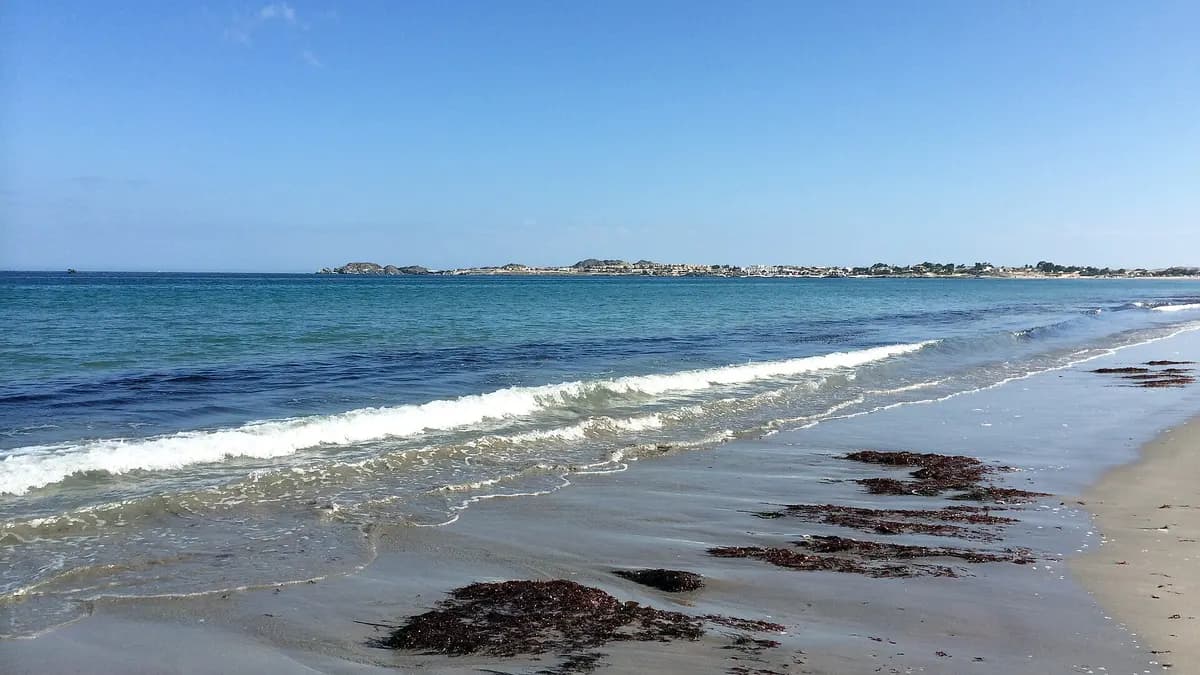
- Combine beach and fossils: the beaches of Bahía Inglesa are minutes away; details in our guide to Bahía Inglesa: beaches, things to do and how to get there.
- Go early: in summer the coastal desert sun is strong at midday; bring water and a hat.
- Don't take fossils: they are heritage protected by law and only authorised specialists may excavate them.
- More museums: if you enjoy museums, see our ranking of Chile's most visited museums.
Frequently asked questions
Where will Chile's first paleontological park be?
In Bahía Inglesa, Caldera municipality, Atacama Region, at the site of the current Los Dedos Paleontological Park.
When will it be ready?
Upgrades to Los Dedos could be completed around 2030 and the full complex would open between 2029 and 2032, according to La Tercera. It depends on funding.
How much will it cost?
The museum centre, US$40 to 50 million; the park upgrades, more than 5,000 million Chilean pesos. The exact cost will be known with the preliminary design in early 2027.
What fossils are there in Bahía Inglesa?
Whales, sharks, crocodiles, marine sloths and giant birds from seven to eight million years ago. The Atacama Region has around 3,000 fossil sites.