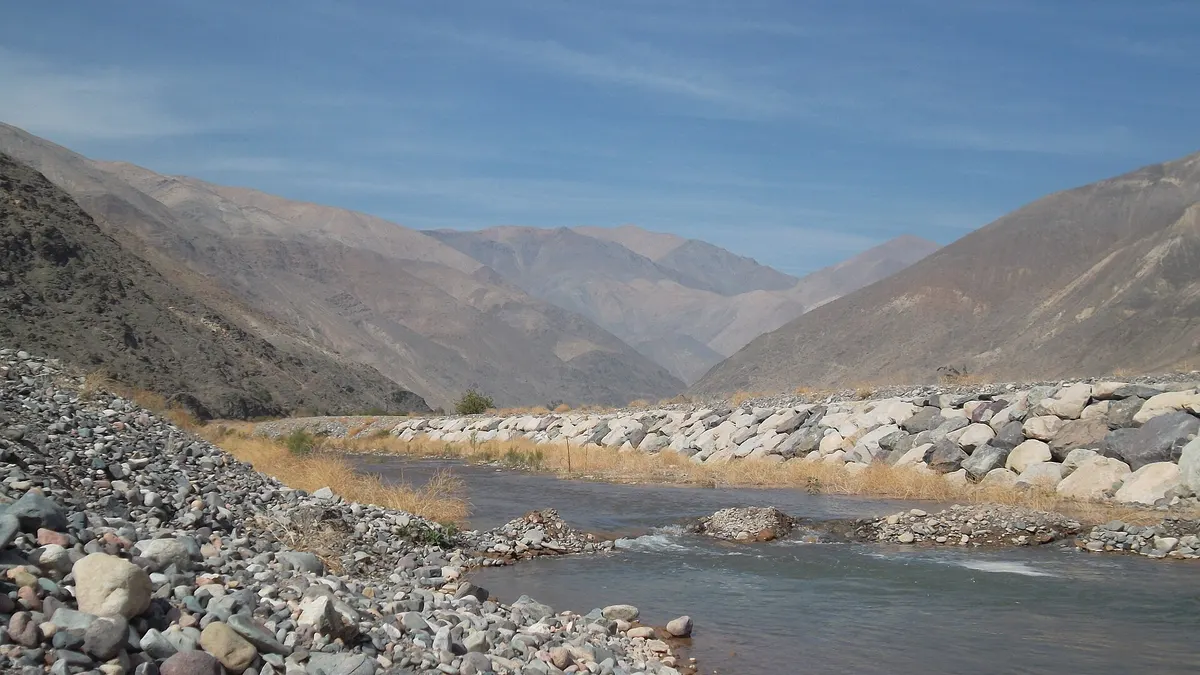
On 21 November the Chilean government declared a preventive emergency in the Atacama and Coquimbo regions over the risk of rivers and ravines flooding as mountain snow melts quickly; it is in force until 31 January 2027. T13 reported it, noting that no new overflows or floods were being reported at the time. Interior Undersecretary Máximo Pavez said the declaration allows authorities "to get ahead of possible new impacts".
The measure follows ten days of rising rivers. According to the Senapred update published by La Tercera on 21 November, since 12 November 2,032 people have been cut off and 38 homes have minor damage in both regions, and 19 roads have closures, damage or restrictions. For anyone visiting the Huasco, Elqui or Limarí valleys this summer, that means rural roads that can be cut and rivers that must not be crossed.
View the data as a table
| People cut off | 2,032 |
| Homes with minor damage | 38 |
| Roads with restrictions | 19 |
| Days of preventive emergency | 72 |
What the preventive emergency in Atacama and Coquimbo involves
- Monitoring: closer watch on riverbeds with the General Water Directorate (DGA), which measures flows in real time.
- Teams on standby: emergency agencies are prepared for higher flows during the summer.
- Coordination: Senapred, the DGA and regional and municipal authorities work to a single plan.
- Not a disaster zone: Atacama governor Miguel Vargas has asked the government to declare one at least in Alto del Carmen and Tierra Amarilla, according to Cooperativa. A preventive emergency is a lesser measure.
- Duration: until 31 January 2027, in the middle of high season.
People cut off by municipality
Alto del Carmen, in the Huasco valley, accounts for almost all of Atacama's isolated residents. In Coquimbo, the focus is Monte Patria, in the Limarí valley:
| Municipality | Region | Situation reported by Senapred |
|---|---|---|
| Alto del Carmen | Atacama | 1,090 cut off and 11 homes with minor damage from activated ravines |
| Tierra Amarilla | Atacama | 27 cut off in the María Isabel area by the Copiapó river rise; 1 evacuated at Cuesta Los Castaños |
| Monte Patria | Coquimbo | 63 families (900 people) cut off and 2 homes with minor damage |
| Paihuano | Coquimbo | 15 cut off in El Pajonal-Alcohuaz |
| Vicuña | Coquimbo | 25 homes with minor damage in Chapilca and Rivadavia |
| Ovalle | Coquimbo | 10 families evacuated in Trapiche Bajo |
Source: Senapred, via La Tercera, 21 November 2026. La Tercera gives 1,117 isolated for Atacama in the regional total and 1,090 for Alto del Carmen; the difference is Tierra Amarilla. Coquimbo's total is 915.
View the data as a table
| Atacama | 1,117 |
| Coquimbo | 915 |
Current alerts and river flows
| Alert or figure | Where | Source |
|---|---|---|
| Red alert for overflow | Alto del Carmen (Atacama) | Senapred |
| Red alert for overflow | Paihuano, Vicuña, Ovalle, Illapel, Salamanca, Monte Patria and Río Hurtado (Coquimbo) | Senapred |
| Río Grande at Las Ramadas | 78.7 m³/s, above the red threshold | DGA |
| Flow at El Maitén, upstream of the Santa Juana reservoir | Over 46 m³/s; could exceed 60 m³/s in December and January | Atacama governor, via Cooperativa |
| Emergency alert (SAE) messages sent | 17 (3 in Atacama and 14 in Coquimbo) | Senapred |
| Heat and wind with sandstorms | Antofagasta, Atacama and the Huasco coast, 20-23 November | Chilean Meteorological Office |
Source: La Tercera with Senapred, DGA and DMC data, and Cooperativa. Flows change by the hour: snowmelt usually peaks in the afternoon, when the sun melts more snow.
View the data as a table
| Alto del Carmen | 1,090 cut off · red alert |
| Tierra Amarilla | 27 cut off |
| Vicuña | 25 homes damaged · red alert |
| Paihuano | 15 cut off · red alert |
| Monte Patria | 900 cut off · red alert |
| Ovalle | 10 families evacuated · red alert |
| Illapel | Red alert |
| Salamanca | Red alert |
Travelling to the Elqui Valley and the Huasco during the preventive emergency
The emergency does not close destinations or ban travel. Vicuña, Pisco Elqui and the observatories are operating, but some secondary roads, especially into the interior of Paihuano and Alto del Carmen, can be cut at short notice. Advice:
- Before you set off: check road status on Senapred, which publishes the list of affected roads.
- Never cross a river or a ravine with water, on foot or by car: snowmelt currents carry rocks.
- Travel early: river levels rise in the afternoon.
- SAE messages: if you receive an alert on your phone, follow the evacuation instructions.
- Book flexibly: ask about date changes if your accommodation is in a rural area.
To plan your trip, see what to do in Vicuña and the Elqui Valley and our earlier story on November's snowmelt floods. Snowmelt is also delaying the opening of the Agua Negra pass, as we explain in our story on the fall in Argentine tourism.
- 12 Nov 2026Rivers start rising
- 19 Nov 20261,761 cut off
- 21 Nov 20262,032 cut off and preventive emergency
- 31 Jan 2027Preventive emergency ends
Frequently asked questions
How long does the snowmelt preventive emergency last?
Until 31 January 2027, in the Atacama and Coquimbo regions.
Can I travel to the Elqui Valley?
Yes. The emergency is preventive and does not close destinations, but check road status on Senapred and do not cross rivers.
How many people are cut off?
2,032 according to Senapred's 21 November update: 1,117 in Atacama and 915 in Coquimbo.
Which municipalities are on red alert?
Alto del Carmen in Atacama, and Paihuano, Vicuña, Ovalle, Illapel, Salamanca, Monte Patria and Río Hurtado in Coquimbo.